5 Minutes, 12 Ideas: CETL Kicks Off Its Seminar Series
The Center of Excellence for Transportation and Logistics (CETL) has recently launched its new initiative: the Seminar Series. The purpose of this initiative is to spark conversation and deepen knowledge about the transportation and logistics (T&L) sector within the academic and industrial community.
The first seminar in the series, which took place on September 1st, 2026, called 5-Minute Madness, consisted of twelve CETL-supported student researchers taking the stage with only five minutes to present the research they’ve been working on. The idea behind this seminar was to give a firsthand look at the work being done at CETL, and a chance to showcase the impact this research can have on our island. The event was a total success, with an audience of approximately 30 attendees, students and professors alike, eager to expand their knowledge about the transportation and logistics sector.
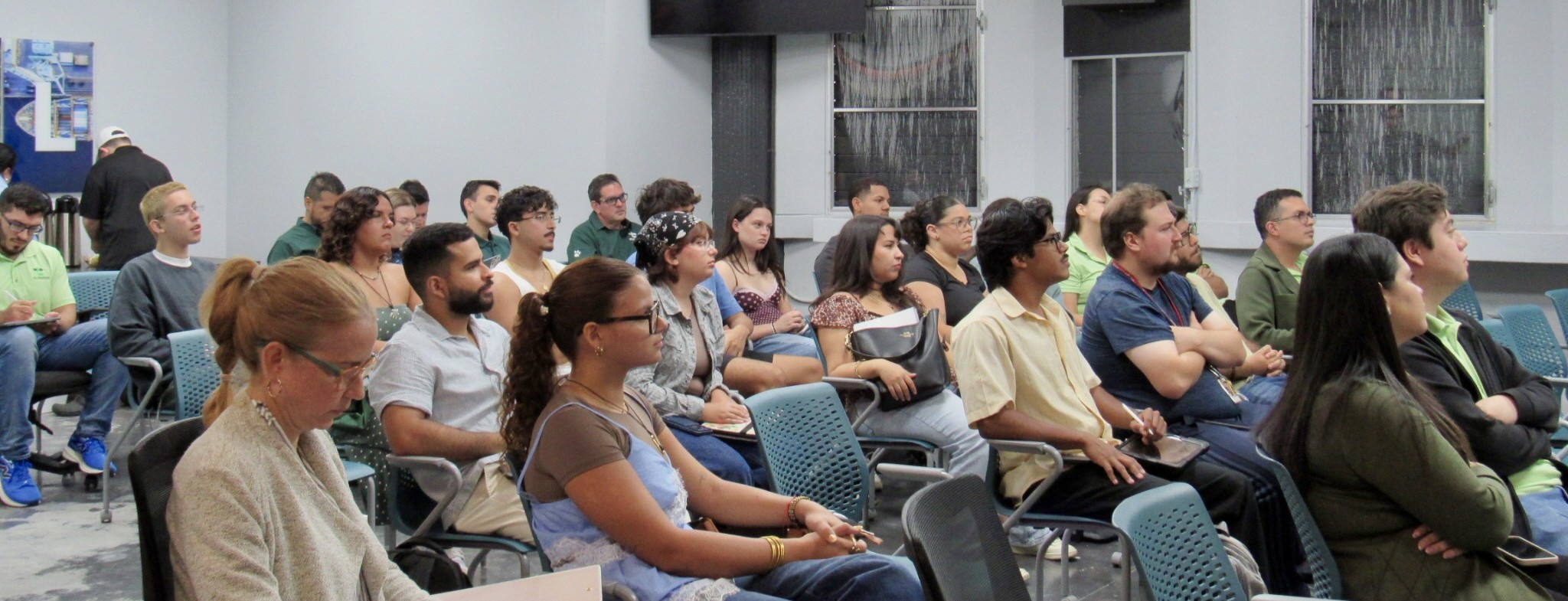 Here’s a look at the 12 projects and the students who are leading the way for the future of transportation and logistics that presented in the CETL Seminar Series: 5-Minute Madness:
The 5-Minute Madness started off strong with Wendy Pulido’s project titled “Puerto Rico Freight Data Observatory and Freight Forecasting Model” with the faculty advisors Daniel Rodríguez & Héctor J. Carlo. The objective of Pulido’s project is to collect industrial and economic data, port and shipping data, road network data and geospatial and demographic data in order to create a platform that will visualize how and what cargo moves through Puerto Rico’s municipalities. This will aid in determining the ideal locations for critical corridors, infrastructure investment, industrial development, and provide a guarantee for the resilience of these decisions.
This project was followed by “Puerto Rico Freight Data Observatory and Freight Forecasting Model: Data Visualization” by Elian Brevan with the faculty advisor Daniel Rodríguez. The objective of his project is to create a model for traffic assignment, land use, and maritime ship movement visualization, as well as maritime tonnage flow. The goal of this project is to facilitate the decision-making process by providing visual elements to transportation and logistics data.
The project “AI-Driven Road Condition Mapping Using Truck Sensor Data & Simulation-Based Driver Modeling” by Daniel Febles, advised by Juan Patarroyo Montenegro has the objective of taking accelerometer sensor data to create an AI model that can predict the locations of potholes in truck routes.
The next project is titled “AI-Driven Road Condition Mapping Using Truck Sensor Data & Simulation-Based Driver Modeling: Truck Simulator and Driver Profiling” by Natalia Solórzano accompanied by the faculty advisor Juan F. Medina Lee. The objective of this project is to analyze the driving behaviors of truck drivers with AI-created routes with the goal of correcting erratic behaviors.
The project “AI-Assisted Smart Manufacturing Station” by Valerie Morales, advised by Samuel Bonet and Héctor J. Carlo, has the goal of creating a smart workstation with human-system interaction at the forefront for the reduction of errors and SOP deviations, reduction of time and cost of administrations, wellbeing of the operator, and the contribution to the industry 4.0.
The project “AI-Assisted Smart Manufacturing Station: Digital Twin and Software Development” by Tomás Gómez and advised by Samuel Bonet & Héctor J. Carlo has the objective of creating a dynamic interface that has real-time hand gesture recognition that facilitates the process between software and humans.
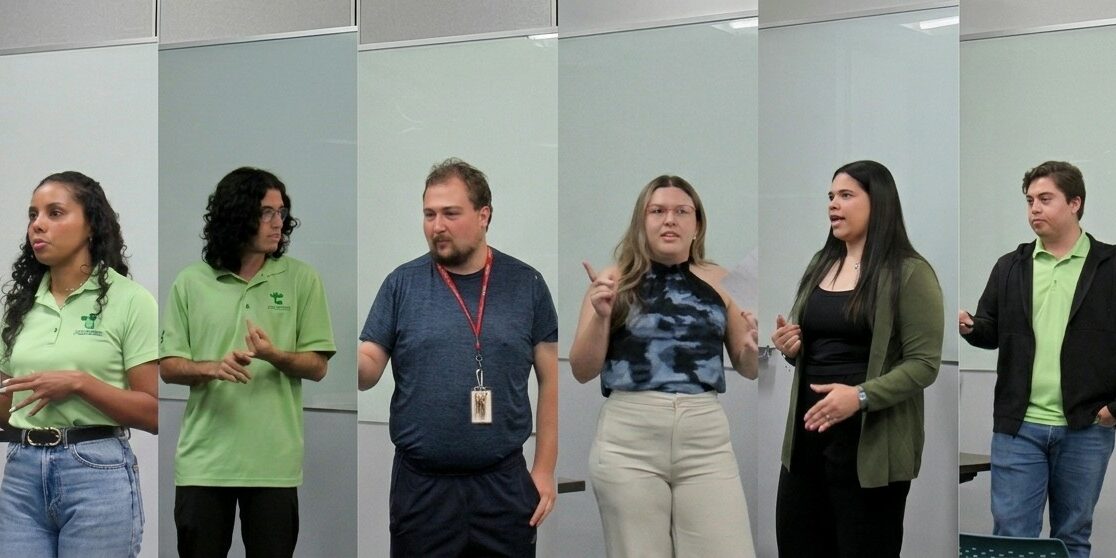
 From left to right: Wendy Pulido, Elian Brevan, Daniel Febles, Natalia Solórzano, Valerie Morales & Tomás Gómez
The next project “Platform for Collecting Freight Data Along the Routes of the Primary Highway Freight System (PHFS) in Puerto Rico” by Giraldo Alonso Velásquez advised by Didier M. Valdés Diaz focuses on identifying strategic locations for traffic sensors in order to obtain cargo data for logistics, planning, infrastructure and maintenance.
“Off-Peak Hour Deliveries (OPHD) as a Strategy to Improve the Efficiency of Puerto Rico’s Freight Transportation System” by Claudia Carrasquilla advised by Dider M. Valdés Díaz proposes the implementation of off-peak hour deliveries in Puerto Rico with the goal of improving reliability, efficiency and productivity in cargo deliveries.
The project “Scalable Spatial Storage System for Tracking Vehicle Fleets” by Iván Conde with the faculty advisor Manuel Rodríguez Martínez has the objective to create an agentic LLM query resolver based on transportation and logistics data to facilitate the decision-making process about cargo and merchandise transportation.
The project “Data-Driven Travel-Demand Management Through Integrated Parking and Ridesharing Cyber-Physical Systems (NSF)” by Carlos Álvarez advised by Daniel Rodríguez, Nayda Santiago and Héctor J. Carlo has the objective to develop a software program that would reduce parking scarcity in public spaces through ridesharing (carpooling) and parking reservation initiatives.
“Edge Sensor Architectures for Maritime Vessels Condition Monitoring and Prescriptive Maintenance” by Juan Ayala advised by Wilfredo E. Lugo Beauchamp focuses on developing a way to provide early maintenance to maritime vessels by identifying defects early on through the implementation of sensors.
Finally, the last project by Jennifer Domínguez: “Additive Manufacturing (3D Printing) for Student-Led Design and Innovation” advised by Héctor J. Carlo focuses on motivating students in the importance of 3D printing for educational, industry, and commercial purposes.
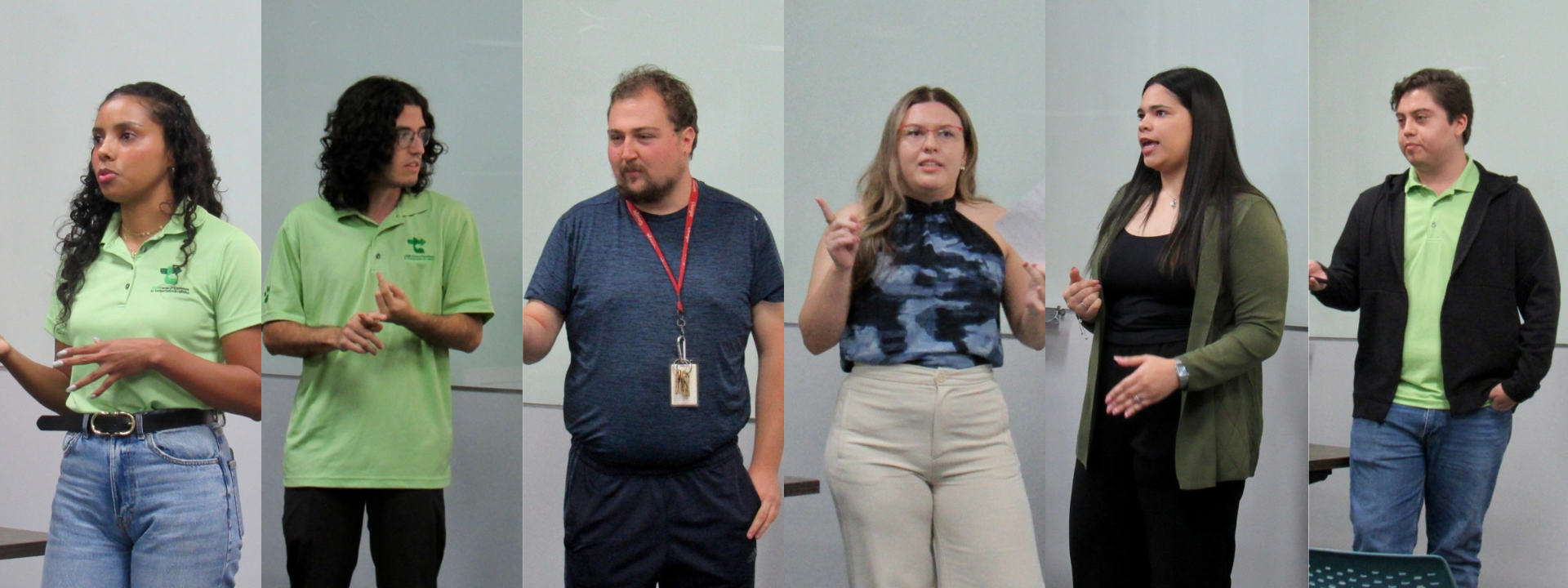
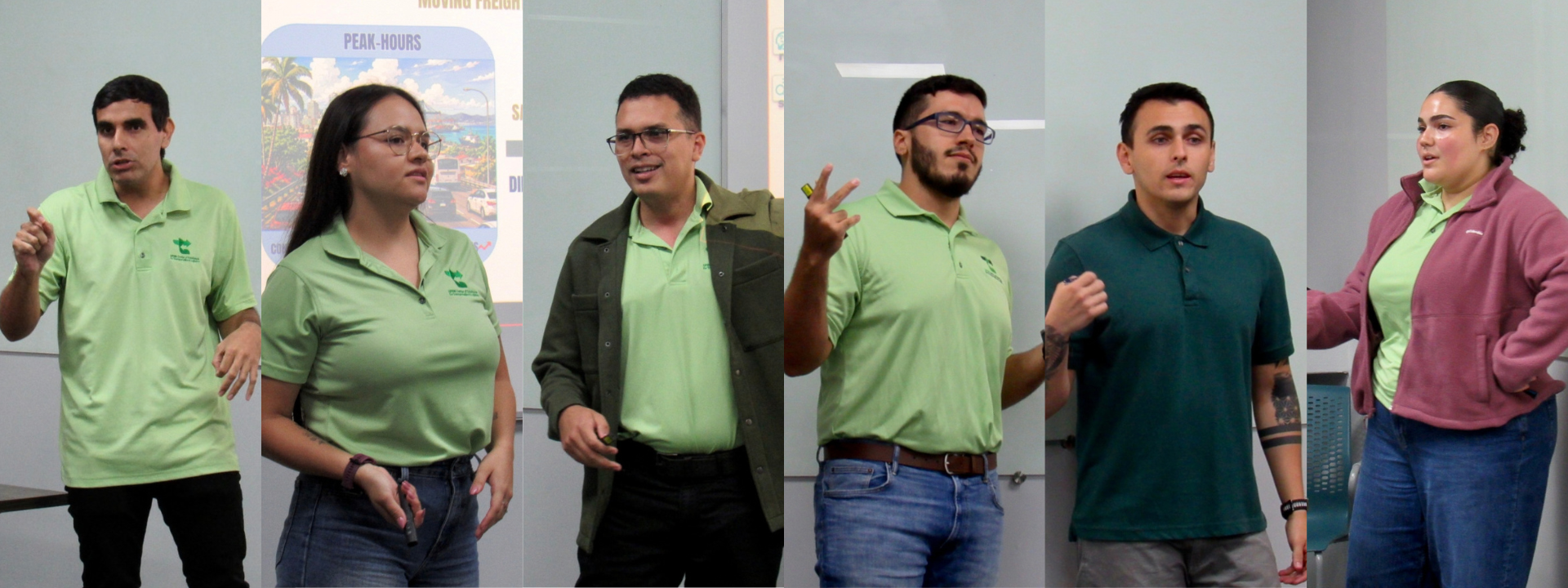 From left to right: Giraldo Alonso, Claudia Carrasquilla, Iván Conde, Carlos Álvarez, Juan Ayala & Jennifer Domínguez
By the end of the seminar attendees were able to learn all about the wide range of projects taking place within CETL. These twelve CETL-backed projects demonstrate the talented and capable people focused on innovating in the transportation and logistics sector.