Innovative Logistics Solutions for a Smarter Future

Author: Natalia M Quiñones Martinez
Date: 11/05/2026
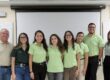
CETL Seminar Series #3 aimed to spark conversation and deepen knowledge about the transportation and logistics (T&L) sector within the academic and industrial community. The seminar, titled “Innovative Logistics Solutions for a Smarter Future,” took place on October 20, 2026. It explored how different approaches, from military operations to campus parking, address transportation challenges. The event featured industry guest and UPRM alumnus 2LT Diego L. Nater, two Puerto Rico Army National Guard NCOs, and CETL researcher Carlos A. Álvarez Aponte.
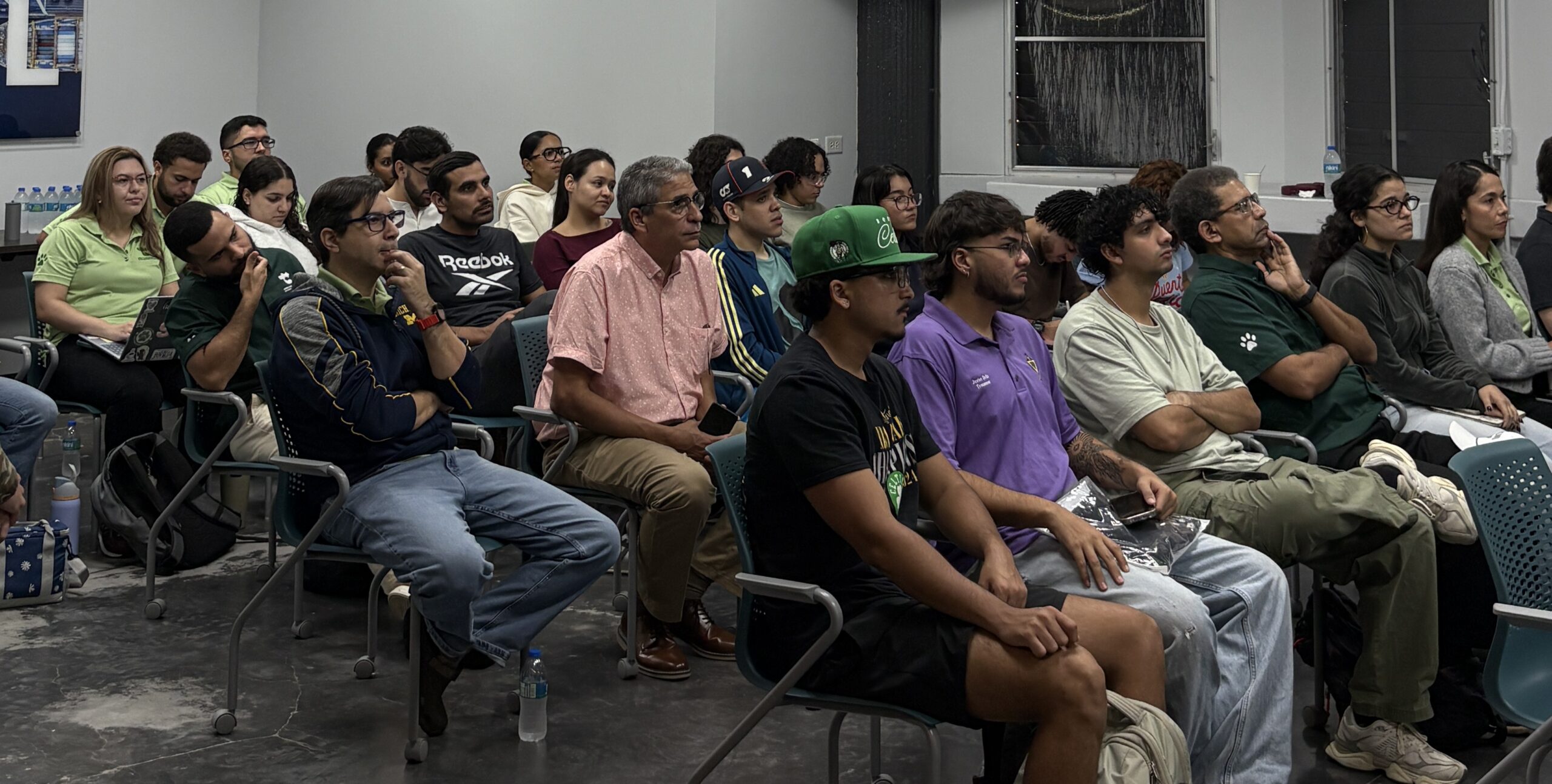 The session opened with a presentation by Nater, an Industrial Engineering alumnus who recently graduated, was commissioned as an Infantry Officer in June, and currently serves as Assistant Business Manager of the Construction and Facilities Management Office (CFMO) of the Puerto Rico National Guard. He was joined by MSG Joel L. Santiago, a Quartermaster NCO with 20+ years of experience in logistics, and SSG Miguel A. Montes, a recruiting and retention NCO and former UPRM student.
The presentation began with a video that framed an air assault mission as a flow network and a high-stakes mathematical puzzle, introducing concepts such as capacity planning, resource optimization and systems thinking. Nater then showed how industrial engineering tools such as system analysis, resource allocation, scheduling and synchronization, and risk management turn readiness inputs (personnel, training, equipment, sustainment, facilities, time and leadership) into a mission-ready force. He walked attendees through the seven phases of an air assault operation, from mission requirement to continued resupply and sustainment, and the industrial engineering connection behind each one, including the “one-third, two-thirds” planning rule that gives soldiers two-thirds of the available time to prepare. MSG Santiago emphasized that military logistics is not so different from its civilian counterpart, and that good planning is what makes projects succeed. Nater also described the CFMO’s work managing around 25 construction projects across the island and closed with a key message: industrial engineering helps identify the best approach, and leadership turns it into coordinated action.
The second half of the seminar belonged to Carlos A. Álvarez Aponte, an M.S. student in Industrial Engineering, who presented “Ridesharing & Smart Parking: An Integrated Parking Allocation and Ride-Sharing System with Paid Parking Reservations under Participation Uncertainty.” His research is advised by Héctor J. Carlo, Daniel Rodríguez-Román and Fernando A. Acosta-Pérez, with undergraduate research assistant Kevin O. Pérez Tollinchi.
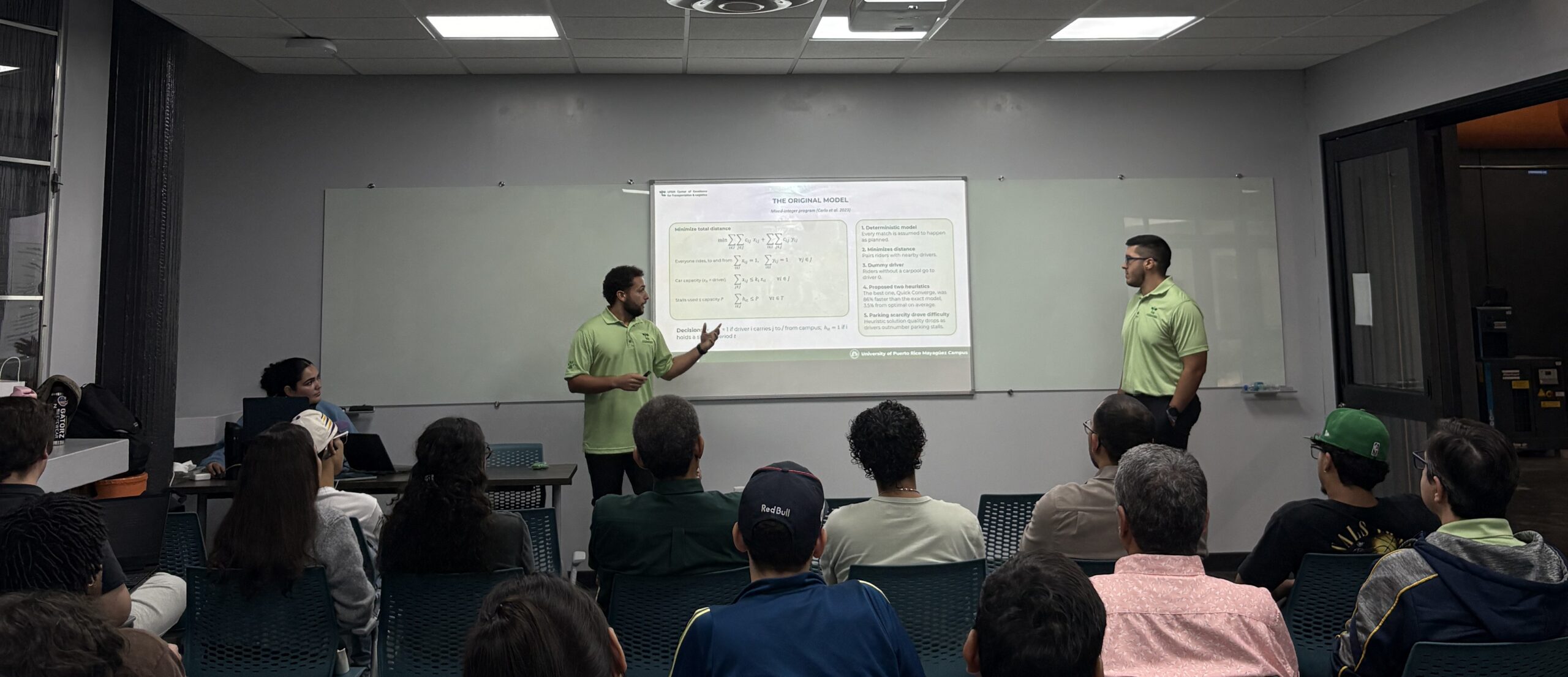 Carlos began with a campus problem: that far more students drive to UPRM than there are parking spaces available, and building more parking is not a feasible solution. The goal, he explained, is to move more people in fewer cars. His work builds on a parking allocation and ride-sharing system that trades a parking spot for a carpool, using an optimization model to match riders with drivers and assign parking. Because the original model assumed that every planned match would happen, the team tested the idea in practice through a pilot of the ROCS Carpool app in a section of a UPRM parking lot. The pilot showed that the system works and that most participants had a positive experience. It also revealed real-world challenges, including mistrust of strangers, driver unavailability, and unscheduled events such as cancellations and no-shows.
These lessons are shaped like the next phase of the research, part of an NSF-funded project that integrates traveler digital twins, next-day and real-time ridesharing, parking models, and smart parking infrastructure, including computer vision to detect vehicles in parking lots. Carlos presented three extensions to the original model. Because the exact model can take a very long time to solve in the hardest cases, the team developed heuristics. The best one, which builds the cost of parking stalls into carpool formation, delivered near-optimal solutions in a matter of seconds. The work has been accepted for presentation at the Transportation Research Board Annual Meeting in January 2027, and the ROCS launch at UPRM is planned for 2027.
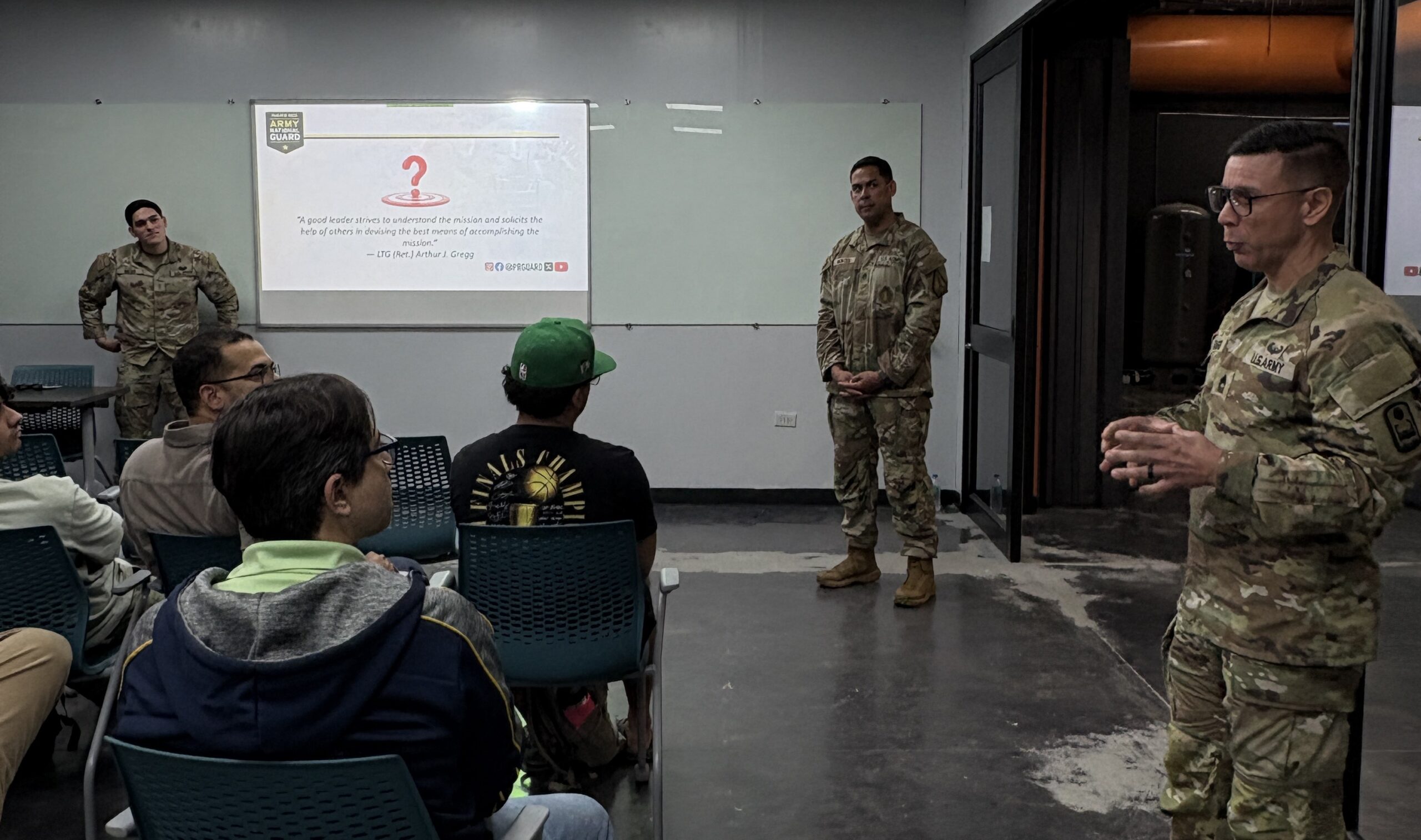 As Seminar Series #3 came to an end, one message stood out: the strongest logistics solutions are built on thoughtful planning and a willingness to adapt. Whether in a military operation or an academic setting, the principles remain the same, and they are to understand the system, prepare for variability, and act with purpose. We thank our guest speakers for an inspiring session and invite the CETL community to carry these lessons into their own work.