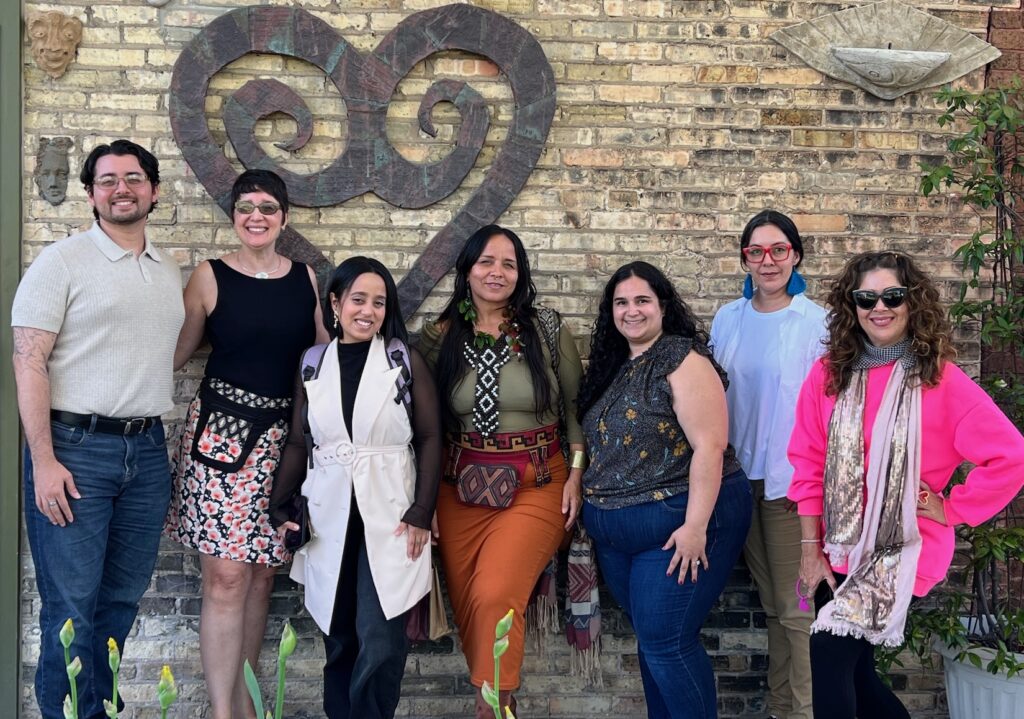
As a process-based lab, members of the OHL work to theorize the practices of crisis oral history and how we can work with and in support of narrators who are also survivors, including in the interviewing, preservation, and dissemination of oral histories. Our objective is to record the living history of people in the Puerto Rican archipelago who are on the frontlines of the climate crisis and the numerous contexts impacting life in the Anthropocene era, including histories of intergenerational colonial practices and systemic racism. We do this work in collaboration with students, members of community partner organizations, and other researchers and practitioners in Puerto Rico, the United States, and globally.
The OHL is generously funded by the Mellon Foundation. In our current funding period, we are exploring the amplification and formalization of our work in crisis oral history. This undertaking includes increasing our educational offerings on-campus and in our communities, expanding our understanding of decolonial digital archiving practices, and theorizing the role of multimodal dissemination of curated oral histories as qualitative data in STEM-focused projects related to climate change and disaster studies. The OHL is also working to circulate knowledge to other research teams throughout the Caribbean and serve as an information hub for those needing project support. This support happens through one-on-one consultations, freely available published materials, and an ongoing webinar series.
Under this grant, members of the lab are
- creating new on-campus educational opportunities
- entering into translocal exchanges with sister communities
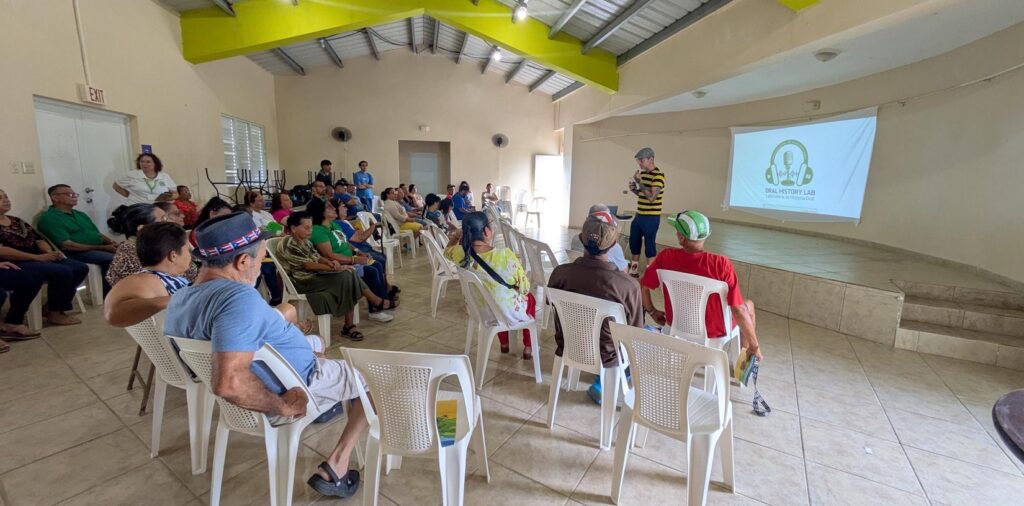
- deepening our work with community partners
- collaborating with scientists, engineers, and healthcare professionals on qualitative data curation for disaster-related research projects
- supporting storytelling projects in the archipelago, the US, and globally
- providing free digital and print community resources
- offering free webinars on relevant crisis oral history practices
- crafting documentary films about land rights, energy justice, agroecology, and water protectors
- working with artists to illustrate their interviews
- curating oral histories in social media campaigns, data visualization tools, and other digital projects
- advancing decolonial preservation methodologies
- and expanding our work on oral history and data ethics.
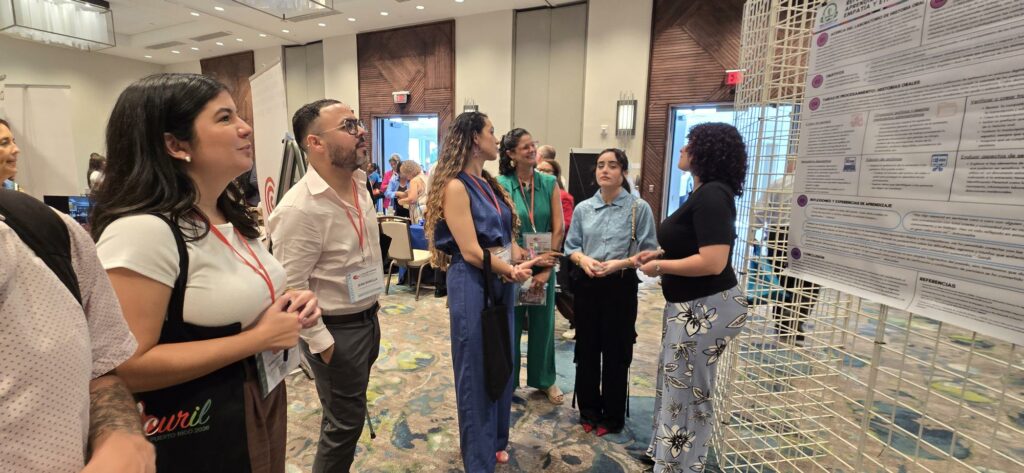
This labor is in addition to our numerous efforts to publish and present our research on crisis oral history as a practice and process that supports communities on the frontlines of the climate crisis, including the historical and contemporary contexts that shape these lived experiences.