The OHL works with a variety of individuals, organizations, and community and citizen scientist groups, sustaining relationships over multiple projects. The list below is an example of those collaborators.
CAMJI-Lares
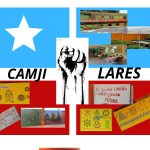
The Centro de Apoyo Mutuo Jíbaro-Lares (CAMJI-Lares) is located in a reclaimed school that was shut down by the Department of Education under Governor Ricky Rosselló. From this space, a group of community organizers practice and teach Indigenous agroecology as a service to their community. They promote traditional Jíbaro ways of living with the land and teach surrounding communities how to claim these ancestral knowledges.
The OHL began collaborating with members of the CAMJI—including Pluma Bárbara Moreno Torres, Carlos Rafael Pitirre, and Diana Viera—on our 2022 American Council of Learned Societies Digital Justice Development Grant, “Speaking into Silences: Building Community Archives across the Puerto Rican Archipelago.” In this project, the OHL provided mentorship, consultation, training in interviewing and preservation, and a technology package to support oral histories undertaken with community elders about Jíbaro agrarian practices and herbal healing. These interviews are preserved onsite and in the OHL digital repository.
These oral histories served as the basis for the cocreation of a print and digital zine, Nuestras Voces Jíbaras entre lo Agrario y lo Indígena, which was designed by former OHL Graduate Research Fellow, Yaritza Sánchez Silva, and reflects agrarian and Indigenous knowledge crucial to disaster preparedness and crisis survival. Funding for the zine was provided by ACLS and the Humanities Action Lab (HAL). In 2026, Yaritza will lead two zine-making workshops at the CAMJI, one for children and one for adults.
Pluma later joined members of the OHL on a panel at the 2025 Latin American Studies Puerto Rico Section Conference, “This Land is Ours.” This presentation framed a transarchipelagic conversation about land rights in Puerto Rico that included rural, Indigenous land back movements and resistance to urban gentrification and population displacement. This conversation between leaders at the CAMJI and Colectivo PerlArte is the focus of our forthcoming documentary film, Veredas de libertá, and an essay, “Form and Function: Oral History as Mutual Aid.”
This discussion of land rights has expanded from a transarchipelagic to a translocal conversation with the inclusion of the HAL team organized by the Buildings-Landscapes-Cultures Field School at the University of Wisconsin-Milwaukee led by Arijit Sen. The OHL was proud to welcome members of the Milwaukee team to both the CAMJI and Colectivo PerlArte in 2026, and to visit the urban community gardens of Milwaukee. We are currently editing a video of reflections from this exchange and looking for ways to continue building this connection between Lares, La Perla, and Milwaukee.
CAMJI-Lares
El Centro de Apoyo Mutuo Jíbaro-Lares (CAMJI-Lares) está ubicado en una escuela recuperada que había sido clausurada por el Departamento de Educación durante la administración del gobernador Ricky Roselló. Desde este espacio, un grupo de organizadores comunitarios practica y enseña la agroecología indígena como un servicio a su comunidad. Promueven las formas tradicionales jíbaras de convivir con la tierra y enseñan a las comunidades vecinas a reclamar estos conocimientos ancestrales.
El OHL comenzó a colaborar con miembros del CAMJI—incluyendo Pluma Bárbara Moreno Torres, Carlos Rafael Pitirre y Diana Viera—en nuestra beca de 2022 para el desarrollo de justicia digital del American Council of Learned Societies (ACLS), titulada “Speaking into Silences: Building Community Archives across the Puerto Rican Archipelago.” En este proyecto, el OHL brindó mentoría, consultoría, capacitación en técnicas de entrevista y preservación, así como un empaque tecnológico para apoyar la preservación de historias orales de los mayores de la comunidad sobre las prácticas agrarias jíbaras y la sanación con hierbas. Estas entrevistas se conservan en el propio centro como en el repositorio digital del OHL.
Dichas historias orales sirvieron como base para la cocreación de un zine o cartilla en formato impreso y digital titulada Nuestras Voces Jíbaras entre lo Agrario y lo Indígena. Esta cartilla fue diseñada por Yaritza Sánchez Silva, exinvestigadora de posgrado del OHL, y refleja conocimientos agrarios e indígenas cruciales para la preparación ante desastres naturales y la supervivencia en situaciones de crisis. El financiamiento de la cartilla fue provisto por ACLS y el Humanities Action Lab (HAL). En 2026, Yaritza dirigirá dos talleres de creación de cartillas en el CAMJI, uno dirigido a niños y otro a adultos.
Posteriormente, Pluma se unió a miembros del OHL en un panel durante la conferencia de la Sección de Puerto Rico de la Asociación de Estudios Latinoamericanos de 2025, titulada “This Land is Ours.” Esta presentación enmarca una conversación transarchipelágica sobre los derechos a la tierra en Puerto Rico, incluyendo movimientos rurales e indígenas de restitución de tierras, así como la resistencia a la gentrificación urbana y al desplazamiento de la población. Esta conversación entre líderes del CAMJI y el Colectivo PerlArte es el enfoque de nuestro próximo documental, Veredas de libertá, y del ensayo “Form and Function: Oral History as Mutual Aid.”
Esta discusión sobre los derechos de la tierra ha pasado de una conversación transarchipelágica a una translocal con la inclusión del equipo HAL, organizado por el Buildings-Landscapes-Cultures Field School de la Universidad de Wisconsin-Milwaukee y dirigido por Arijit Sen. El OHL se enorgulleció de recibir a miembros del equipo de Milwaukee tanto en el CAMJI como en el Colectivo PerlArte en 2026 y de visitar los huertos comunitarios urbanos de Milwaukee. Actualmente, estamos editando un video con reflexiones sobre este intercambio y buscando maneras de seguir fortaleciendo el vínculo entre Lares, La Perla y Milwaukee.
Colectivo PerlArte
Colectivo PerlArte is a community arts center administrated by community organizer Lorel Denisse Cubano Santiago who helped to found it after Hurricane María. Located in La Perla, San Juan, it is a space for creation, memory, and resistance against displacement and inequality.
Lorel was first interviewed by Ricia Chansky and Marci Denesiuk in 2018 for the mass-listening project Mi María: Puerto Rico after the Hurricane, and her narrative appears in the Voice of Witness book, Mi María: Surviving the Storm, Voices from Puerto Rico.
Later, through a grant from the American Council of Learned Societies, Colectivo PerlArte and the OHL collaborated on the community storytelling and archiving project, Speaking into Silences: Building Community Archives across the Puerto Rican Archipelago. In this project, members of PerlArte received training from the OHL in order to conduct interviews with residents about the neighborhood in order to resist the disaster capitalism maneuvers of gentrification and population displacement.
PerlArte Artist in Residence, Yadianis Umpierre Sánchez, painted a mural on the side of the community arts center containing elements from the oral histories recorded in this project, including a QRC linking to the digital archive. The creation of this mural is documented in the film, La Perla en que vivimos… Members of the OHL were able to share data from the PerlArte project with our colleagues on the Solar Oasis Team at El Centro Hemisférico de Cooperación en Investigación y Educación en Ingeniería y Ciencia Aplicada resulting in the arts center receiving a solar hub. During the blackout caused by Hurricane Erin, PerlArte was able to use their solar energy to serve as a breast milk preservation center.
Lorel later joined members of the OHL on a panel at the 2025 Latin American Studies Puerto Rico Section Conference, “This Land is Ours.” This presentation framed a transarchipelagic conversation about land rights in Puerto Rico that included resistance to urban gentrification and population displacement, and rural, Indigenous land back movements. This conversation between leaders at PerlArte and the CAMJI Lares Pueblo is the focus of our forthcoming documentary film, Veredas de libertá, and an essay, “Form and Function: Oral History as Mutual Aid.”
This discussion of land rights has expanded from a transarchipelagic to a translocal conversation with the inclusion of the HAL team organized by the Buildings-Landscapes-Cultures Field School at the University of Wisconsin-Milwaukee led by Arijit Sen. The OHL was proud to welcome members of the Milwaukee team to both PerlArte and the CAMJI Lares Pueblo in 2026, and to visit the urban community gardens of Milwaukee. We are currently editing a video of reflections from this exchange and looking for ways to continue building this connection between La Perla, Lares, and Milwaukee.
Lorel and members of PerlArte will participate in an upcoming project sponsored by HAL that focuses on a group of faculty, students, and community partners who have worked together in a research and climate justice collaborative since the rapid-succession landfall of Hurricanes Irma and María in 2017, “Research, Solidarity, Friendship.”
Colectivo PerlArte
Colectivo PerlArte es un centro comunitario de artes administrado por la organizadora comunitaria Lorel Denisse Cubano Santiago, quien ayudó a fundarlo tras el huracán María. Ubicado en La Perla, San Juan, es un espacio para la creación, la memoria y la resistencia frente al desplazamiento y la desigualdad.
Lorel fue entrevistada por primera vez por Ricia Chansky y Marci Denesiuk en 2018 para el proyecto de escucha colectiva Mi María: Puerto Rico after the Hurricane, y su narrativa aparece en el libro Voice of Witness, Mi María: Surviving the Storm, Voices from Puerto Rico.
Posteriormente, mediante una subvención del American Council of Learned Societies (ACLS), el Colectivo PerlArte y el OHL colaboraron en el proyecto de narración comunitaria y archivo “Speaking into Silences: Building Community Archives across the Puerto Rican Archipelago.” En este proyecto, miembros de PerlArte recibieron capacitación del OHL para realizar entrevistas con residentes sobre el vecindario, con el fin de resistir las maniobras de gentrificación y desplazamiento poblacional asociadas al capitalismo del desastre.
La artista residente de PerlArte, Yadianis Umpierre Sánchez, pintó un mural en el exterior del centro comunitario de artes que incorpora elementos de las historias orales recopiladas en este proyecto, incluyendo un código QR que enlaza con el archivo digital. La creación de este mural está documentada en la película La Perla en que vivimos… Los miembros del OHL compartieron datos del proyecto PerlArte con sus colegas del Solar Oasis Team en el Centro Hemisférico de Cooperación en Investigación y Educación en Ingeniería y Ciencia Aplicada, lo que resultó en la instalación de un centro de energía solar en el centro de arte. Durante el apagón,causado por el huracán Erin, PerlArte pudo utilizar su energía solar para funcionar como centro de conservación de leche materna.
Más tarde, Lorel se unió a miembros del OHL en un panel durante la conferencia de la Sección de Puerto Rico de la Asociación de Estudios Latinoamericanos de 2025, titulada “This Land is Ours.” Esta presentación enmarcó una conversación transarchipelágica sobre los derechos territoriales en Puerto Rico, que incluyó la resistencia a la gentrificación urbana y al desplazamiento poblacional, así como los movimientos rurales indígenas de restitución de tierras. Esta conversación entre líderes del PerlArte y el CAMJI Lares Pueblo es el enfoque de nuestro próximo documental, Veredas de libertá, y del ensayo “Form and Function: Oral History as Mutual Aid.”
Esta discusión sobre los derechos de la tierra ha pasado de una conversación transarchipelágica a una translocal con la inclusión del equipo HAL, organizado por el Buildings-Landscapes-Cultures Field School de la Universidad de Wisconsin-Milwaukee y dirigido por Arijit Sen. El OHL tuvo el orgullo de recibir a miembros del equipo de Milwaukee tanto en el CAMJI como en el Colectivo PerlArte en 2026 y de visitar los huertos comunitarios urbanos de Milwaukee. Actualmente, estamos editando un video con reflexiones sobre este intercambio y buscando maneras de seguir fortaleciendo el vínculo entre Lares, La Perla y Milwaukee.
Lorel y miembros del PerlArte participarán en un próximo proyecto auspiciado por HAL enfocado en un grupo de facultad, estudiantes y colaboradores comunitarios que han trabajado juntos en una iniciativa colaborativa de investigación y justicia climática, titulada “Research, Solidarity, Friendship” desde que los huracanes Irma y María tocaron tierra en rápida sucesión en 2017.
Come Colegial
Come Colegial is a student-led initiative at UPR-Mayagüez that fights food insecurity by providing free nonperishable food, hot meals, and fresh produce to students in need. Founded in 2014, its mission is to ensure that no student has to choose between hunger and education, supporting them until they reach food stability.
Members of the OHL collaborated with Come Colegial long before there was a lab. When the Sheltered in Place crisis oral history project began in 2020, Come Colegial was the main focus. Ricia Chansky and four Graduate Research Fellows—Gabrielle Armstrong Velázquez, Natalia Betancourt Malavé, Aleyshka Estevez Quinones, and Yarelis Marcial Acevedo—interviewed Come Colegial’s cofounder and advisor, Lucy Serrano Gastón. The focus of this project was to study mutual aid organizations addressing food insecurity that began or significantly scaled up their work after Hurricane María and then adapted it for the new needs of COVID-19.
This interview and four others became the foundation of our work with the Archivo de Respuestas de Emergencias de Puerto Rico, a collaborative project between UPR-Mayagüez, UPR-Río Piedras, Michigan State University, and the Digital Library of the Caribbean. This project is a digital archive and exhibition on the Omeka S platform that preserves materials related to mutual aid organizations working to mitigate stratified disasters in the archipelago.
Lucy, and other narrators from this project, are also featured in the OHL documentary, Our Piece of Land.
In the second phase of the AREPR project, a team led by OHL Librarian, Natalia Hernández Mejías, digitized and preserved over 500 products related to Come Colegial’s ten years of service to the UPR-Mayagüez community for an Omeka S subsite on the AREPR website, including a TimelineJS data visualization tool built by Aleyshka Estevez.
Currently, Come Colegial is the topic of a series of interviews being conducted by Natalia Betancourt related to how university mutual aid organizations sustain their work over the necessary changes in leadership that happen when members of a directive graduate. These interviews are framed within the context of chronic crises that cause organizations to scale up and adapt when presented with new needs.
Come Colegial is also the focus of our OHL work with social media campaigns that curate excerpts of oral history collections for engagement with climate justice issues.
Come Colegial
Come Colegial es una iniciativa liderada por estudiantes en la UPR-Mayagüez que combate la inseguridad alimentaria proveyendo gratuitamente alimentos no perecederos, comidas calientes y productos frescos a estudiantes en necesidad. Fundada en el 2014, su misión es asegurar que ningún estudiante tenga que escoger entre el hambre y la educación, apoyándolos hasta que alcancen la estabilidad alimentaria.
Los miembros del OHL han colaborado con Come Colegial desde mucho antes de que existiera el laboratorio. Cuando el proyecto de historia oral, “Sheltered in Place” (“Refugiados en el lugar”), comenzó en el 2020, Come Colegial fue su enfoque principal. Ricia Chansky y cuatro investigadoras graduadas—Gabrielle Armstrong Velázquez, Natalia Betancourt Malavé, Aleyshka Estevez Quinones y Yarelis Marcial Acevedo—entrevistaron a la cofundadora y asesora de Come Colegial, Lucy Serrano Gastón. El propósito de este proyecto era estudiar a las organizaciones de ayuda mutua que abordaban la inseguridad alimentaria, que surgieron o expandieron significativamente su trabajo tras el huracán María, y que luego se adaptaron para responder a las nuevas necesidades del COVID-19.
Esta entrevista y otras cuatro se convirtieron en la base de nuestro trabajo con el Archivo de Respuestas de Emergencias de Puerto Rico, un esfuerzo colaborativo entre la UPR-Mayagüez, la UPR-Río Piedras, la Universidad del Estado de Michigan (Michigan State University) y la Biblioteca Digital del Caribe (Digital Library of the Caribbean). Este proyecto consiste en un archivo digital y una exhibición en la plataforma Omeka S que preservan materiales relacionados con organizaciones de ayuda mutua que trabajan para mitigar los desastres estratificados en el archipiélago.
Lucy y otros narradores de este proyecto también aparecen en el documental del OHL, Our Piece of Land.
En la segunda fase del proyecto AREPR, un equipo liderado por la bibliotecaria del OHL, Natalia Hernández Mejías, digitalizó y preservó sobre 500 productos relacionados con los diez años de servicio de Come Colegial a la comunidad de la UPR-Mayagüez para un subsitio de Omeka S en el sitio web AREPR, el cual incluye una herramienta de visualización de datos en TimelineJS creada por Aleyshka Estevez
Actualmente, Come Colegial es el tema de una serie de entrevistas dirigidas por Natalia Betancourt sobre cómo las organizaciones de ayuda mutua universitarias sustentan su trabajo a lo largo de los cambios necesarios en el liderazgo que ocurren cuando miembros de la directiva se gradúan. Estas entrevistas están enmarcadas dentro de un contexto de crisis crónicas que hacen que las organizaciones expandan su alcance y se adapten al enfrentarse a nuevas necesidades.
Come Colegial también es el enfoque de nuestro trabajo del OHL con campañas de redes sociales que curan extractos de colecciones de historia oral para fomentar el compromiso con problemas de justicia climática.
Edgardo Miranda-Rodríguez
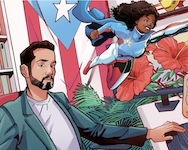 In March 2025, OHL director Ricia Chansky interviewed graphic novelist Edgardo Miranda-Rodríguez at the opening of his exhibit, Arte de la Borinqueña, displayed at Humanidades Puerto Rico in San Juan. They discussed how his lived experiences in Puerto Rico shaped his creation of the superhero La Borinqueña and her commitment to environmental and climate justice. The OHL later commissioned him to illustrate his interview as part of their work to create public-facing outputs linked to their digital archive.
The result was an illustration (shown in part in this image) that is the inspiration for a mural to be installed in the General Library at UPR-Mayagüez outside of the OHL in commemoration of the lab’s fifth anniversary. A version of this illustration has also been made into a mural in the new Puerto Rican Cultural District in Holyoke, MA. The mural “celebrates Puerto Rican heritage and the power of storytelling.”
A year after the initial interview, the OHL team met with Miranda-Rodríguez to learn about the process of making the illustration and reflect on his experiences working with the OHL. The OHL will be unveiling the mural and sharing a video of this conversation with Miranda-Rodríguez about his creative process in February 2027 at the celebration of the five-year anniversary of the lab.
Edgardo Miranda-Rodríguez also spoke at a Library Week event in April 2025, which was organized by the OHL, the UPRM General Library and the UPRM English Department in collaboration with PSCA – RUM, EDSA RUM, and RUM Linguists.
Artwork ©2026, Edgardo Miranda-Rodríguez, illustrated by Mike Hawthorne with colors by Eliana Falcón. No further reproduction or distribution is permitted without the permission of the owner.
Edgardo Miranda-Rodriguez
En marzo de 2025, la directora del OHL, Ricia Chansky, entrevistó al novelista gráfico Edgardo Miranda-Rodríguez durante la inauguración de su exposición, Arte de la Borinqueña, presentada en Humanidades Puerto Rico, en San Juan. Conversaron sobre cómo sus experiencias de vida en Puerto Rico influyeron en la creación de la superheroína La Borinqueña y en su compromiso con la justicia ambiental y climática. Posteriormente, el OHL le encargó ilustrar su entrevista como parte de su trabajo para crear materiales dirigidos al público vinculados a su archivo digital.
El resultado fue la ilustración (mostrada parcialmente en esta imagen) que sirve de inspiración para un mural que se instalará en la Biblioteca General de la UPR-Mayagüez, afuera del OHL, en conmemoración del quinto aniversario del laboratorio. Una versión de esta ilustración también se convirtió en un mural en el nuevo Distrito Cultural Puertorriqueño de Holyoke, Massachusetts. El mural “celebrates Puerto Rican heritage and the power of storytelling” (“celebra la herencia puertorriqueña y el poder de contar historias”).
Un año después de la entrevista inicial, el equipo del OHL se reunió con Miranda-Rodríguez para conocer el proceso de creación de la ilustración y reflexionar sobre sus experiencias trabajando con el OHL. El OHL inaugurará el mural y compartirá un video de esta conversación con Miranda-Rodríguez sobre su proceso creativo en febrero de 2027, durante la celebración del quinto aniversario del laboratorio.
Edgaro Miranda-Rodríguez también conversó en el evento de la Semana de la Biblioteca, en abril de 2025, organizado por el OHL, la Biblioteca General de la UPRM y el Departamento de Inglés, en colaboración con PSCA – RUM, EDSA RUM y RUM Linguistics.
Obra de arte ©2026, Edgardo Miranda-Rodríguez, ilustrada por Mike Hawthorne con color de Eliana Falcón. Queda prohibida su reproducción o distribución sin la autorización del propietario.
Fundación de Culebra
Fundación de Culebra is a nonprofit organization founded in 1994 that focuses on conserving, protecting, and promoting the arts, environment, and history of the island municipality of Culebra. Their mission is rooted in education and social values to foster community self-worth and self-management.
When Ricia Chansky and Marci Denesiuk were working on the Mi María: Puerto Rico after the Hurricane project, they traveled to Culebra to interview the Fundación’s director, Luz Rivera Cantwell, who also facilitated interviews with several other residents. Interviews with culebrenses Belle Marie Torres Velázquez, M.D. and Neysha Irizarry Ortiz can be found in the book, Mi María: Surviving the Storm, Voices from Puerto Rico.
The OHL continued working with the Fundación on the community storytelling and archiving project, Speaking into Silences: Building Community Archives across the Puerto Rican Archipelago, funded by the American Council of Learned Societies. In this project, Luz and Doug Lang, working with Culebra’s Musicá Pa’ Culebra program, helped preserve life stories of local musicians, members of the youth orchestra, parents, and community members. These oral histories inspired the creation of a playlist, which showcases the long tradition of music in Culebra and brings awareness to the challenges Culebra faces, such as the lack of a living wage, a shortage of affordable housing, and gentrification.
Members of the Fundación will be working with the OHL team again in 2026 to create a documentary film about the role of the youth orchestra in building community, environmental protections for the island, and working together for successful disaster preparation and response. The children in the orchestra will be featured in the film’s soundtrack.
Fundación Culebra
Fundación de Culebra es una organización sin fines de lucro fundada en 1994, dedicada a conservar, proteger y promover las artes, el medio ambiente y la historia de la isla municipal de Culebra. Su misión se fundamenta en la educación y en los valores sociales para fomentar la autoestima y la autogestión de la comunidad.
Cuando Ricia Chansky y Marci Denesiuk trabajaban en el proyecto Mi María: Puerto Rico after the Hurricane, viajaron a Culebra para entrevistar a la directora de la fundación, Luz Rivera Cantwell, quien también facilitó entrevistas con varios residentes. Las entrevistas con los culebrenses Belle Marie Torres Velázquez, M.D., y Neysha Irizarry Ortiz se encuentran en el libro Mi María: Surviving the Storm, Voices from Puerto Rico.
El OHL continuó trabajando con la Fundación en el proyecto de narración de historias comunitarias y creación de archivos, titulado Speaking into Silences: Building Community Archives across the Puerto Rican Archipelago, financiado por el American Council of Learned Societies. En este proyecto, Luz y Doug Lang, en colaboración con el programa Culebra’s Musicá Pa’ Culebra, ayudaron a preservar las historias de vida de músicos locales, integrantes de la orquesta juvenil, padres y otros miembros de la comunidad. Estas historias orales inspiraron la creación de una lista de reproducción (playlist) que destaca la larga tradición musical de Culebra y visibiliza los desafíos que enfrenta la isla, como la falta de un salario digno, la escasez de vivienda asequible y la gentrificación.
Los miembros de la Fundación volverán a trabajar con el equipo del OHL nuevamente en 2026 para crear un documental sobre el papel de la orquesta juvenil en el fortalecimiento de los lazos comunitarios, la protección del medio ambiente de la isla y la colaboración para lograr una preparación y respuestas eficaces ante los desastres. Los niños de la orquesta participarán en la banda sonora de la película.
Fundación Surfrider Puerto Rico
 The Rincón campaign of Fundación Surfrider Puerto Rico works to protect the unique coast of this western municipality through its Blue Water Task Force that has a weekly water testing and alert program. In addition to the testing program, Surfrider is a catalyst for organizing people across the archipelago to protect our beaches and coral reefs from pollution. After Hurricane María, members of Surfrider in Rincón hiked into remote mountainous areas to adapt their seawater testing program to freshwater sources and ensure that people in vulnerable situations had access to potable water.
The Surfrider team in Rincón was an instrumental part of the Mi María crisis oral history project. Ricia Chansky taught a course in which oral histories previously recorded in the project were used as primary texts to spark citizen scientist and community service projects. One team of students chose potable water shortages as their issue and Surfrider as the focus of their project. In their work, they interviewed Surfrider member Steve Tamar and learned from him how to collect water samples and test them for impurities. As their final project, they made a short video about what they learned.
This work formed the foundation of a contribution to Climates of Inequality: Stories of Environmental Justice, an international traveling exhibit curated by the Humanities Action Lab (HAL). This exhibition visited UPR-Mayagüez in 2024 and thousands of visitors visited the General Library to view it. Part of the programming that the OHL did to accompany the exhibit included a panel of water protectors discussing issues on the west coast of the main island of Puerto Rico. Steve and his colleague at Surfrider, Jim Crotty, joined the panel.
Following this presentation, the OHL received additional funding from HAL to make a short documentary film about the work of the Blue Water Task Force. Former OHL Undergraduate Research Fellow, Carhianie Vargas Padín, worked with Surfrider to create The Water Protectors, which explores the topics of hyper-development, unregulated sewage disposal, contamination, climate change, and community action on the west coast of Puerto Rico.
Fundación Surfrider Puerto Rico
La campaña de Rincón de la Fundación Surfrider Puerto Rico trabaja para proteger la costa única de este municipio del oeste mediante su programa Blue Water Task Force (Fuerza de trabajo por aguas limpias), que realiza pruebas semanales de la calidad del agua y emite alertas. Además de este programa de monitoreo, Surfrider sirve como catalizador para organizar a personas de todo el archipiélago en la protección de las playas y de los arrecifes de coral frente a la contaminación. Tras el paso del huracán María, miembros de Surfrider en Rincón caminaron hasta zonas montañosas remotas para adaptar su programa de análisis de agua de mar a fuentes de agua dulce y garantizar que las personas en situaciones vulnerables tuvieran acceso a agua potable.
El equipo de Surfrider en Rincón fue una parte fundamental del proyecto de historia oral sobre las crisis de Mi María. Ricia Chansky impartió un curso en el que las historias orales previamente grabadas para el proyecto se utilizaron como textos primarios para promover proyectos de ciencia ciudadana y de servicio comunitario. Un equipo de estudiantes eligió la escasez de agua potable como su tema y a Surfrider como el enfoque de su proyecto. En su trabajo, entrevistaron a Steve Tamar, miembro de Surfrider, quien les enseñó a recolectar muestras de agua y a analizarlas para detectar impurezas. Como proyecto final, realizaron un video corto sobre lo que aprendieron.
Este trabajo constituyó la base de una contribución a Climates of Inequality: Stories of Environmental Justice (Climas de desigualdad: historias de justicia ambiental), una exposición itinerante internacional organizada por el Humanities Action Lab (HAL). Esta exposición visitó la UPR-Mayagüez en 2024 y miles de visitantes acudieron a la Biblioteca General para verla. Parte de las actividades que el OHL organizó para acompañar la exposición incluyó un panel de defensores del agua que debatieron sobre los problemas de la costa oeste de la isla principal de Puerto Rico. Steve y su colega de Surfrider, Jim Crotty, participaron en el panel.
Después de esta presentación, el OHL recibió fondos adicionales del HAL para realizar un breve documental sobre el trabajo del Blue Water Task Force. Carhianie Vargas Padín, quien anteriormente se desempeñó como asistente de investigación subgraduada del OHL, trabajó con Surfrider para crear The Water Protectors (Los protectores del agua), que explora los temas del desarrollo excesivo, la eliminación de aguas residuales sin regulación, la contaminación, el cambio climático y la acción comunitaria en la costa oeste de Puerto Rico.