November 19
Public Humanities Day: “You Can’t Erase Us: Testimony as Resistance in the Time of Climate Denial”
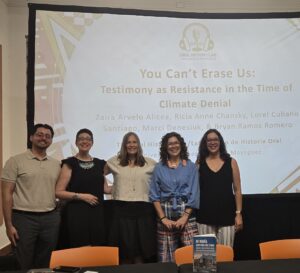
Bryan Ramos Romero, Ricia Chansky, Marci Denesiuk, Lorel Cubano, and Zaira Arvelo Alicea
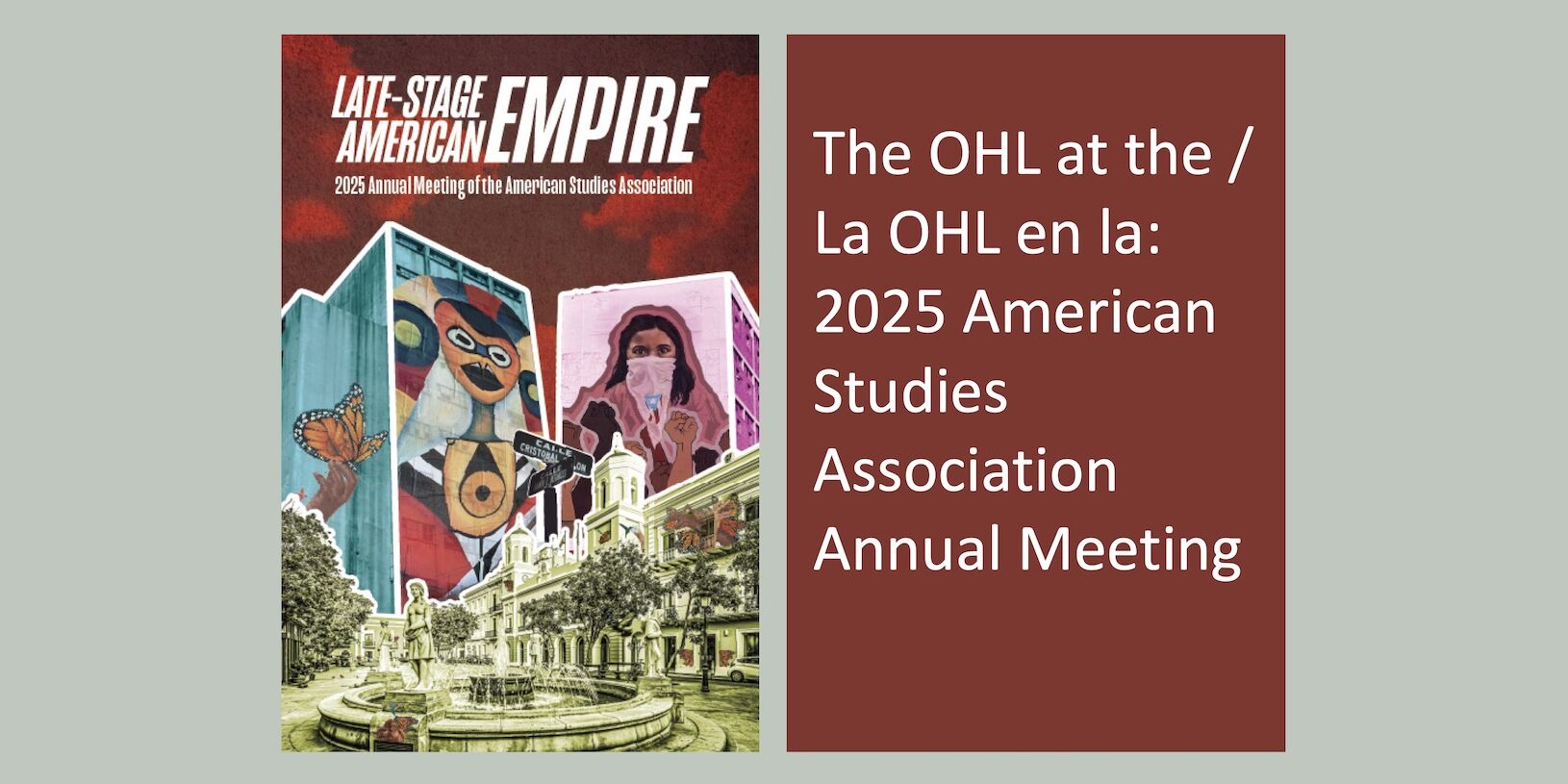
Zaira Arvelo Alicea, Ricia Chansky, Lorel Cubano, Marci Denesiuk, and Bryan Ramos Romero presented “You Can’t Erase Us: Testimony as Resistance in the Time of Climate Denial” in a special Public Humanities Day that was part of the 2025 American Studies Association Annual Meeting. The event highlighted oral histories from Mi María: Surviving the Storm, Voices from Puerto Rico with readings by narrators and interviewers. Attendees discussed how storytelling resists governmental erasure of climate crisis narratives and viewed a mural created through a digital justice project with PerlArte as a public-facing example of this work. The OHL short documentary La Perla en que vivimos… was also shared. This film was created by award-winning filmmaker Guillermo Gómez Álvarez and documents the creation of a mural painted on the main entrance to the Colectivo PerlArte gallery that was designed to bring attention to some of the challenges La Perla faces such as gentrification and disaster capitalism.

November 20
Roundtable: “Speaking Against Silencing: Narrative Resistance to Erasing Disaster”
Members of the Oral History Lab at UPRM presented the roundtable “Speaking Against Silencing: Narrative Resistance to Erasing Disaster.” Presenters Zaira Arvelo Alicea, Jaquelina Álvarez, Ricia Chansky, Marci Denesiuk, and Bryan Ramos Romero discussed oral history projects in Puerto Rico documenting experiences of hurricanes, earthquakes, COVID-19, and economic depression. The roundtable emphasized the power of testimony from frontline and marginalized communities to challenge dominant narratives of denial.
November 21
Roundtable: “Digital Solidarities: Archiving Caribbean Lives in the Face of Empire”
In this roundtable focused on digital humanities, Natalia Hernández Mejías and Natalia Betancourt Malave of the OHL came together with the After the Storm Collective and Taller Entre Aguas to discuss their data, methods, and mapping projects that aim to lift the veil on American empire, while highlighting solidarity across the Caribbean. Faculty members, graduate students, independent scholars, and community organizers shared their projects and methods that respond to the need to name empire and resist the ways it aims to erase Black diasporic life. Focused on geographies across the Greater Caribbean, these projects engage the growing field of digital humanities to create digital archives, StoryMaps, and exhibitions that focus Black and Afro-descendant communities across Puerto Rico, the U.S. Virgin Islands, and the U.S. Black South.
19 de noviembre
Día de Humanidades Públicas: “You Can’t Erase Us: Testimony as Resistance in the Time of Climate Denial”
Zaira Arvelo Alicea, Ricia Chansky, Lorel Cubano, Marci Denesiuk y Bryan Ramos Romero presentaron “You Can’t Erase Us: Testimony as Resistance in the Time of Climate Denial” durante el Día de Humanidades Públicas, un evento especial que formó parte de la Reunión Anual 2025 de la American Studies Association. La actividad destacó historias orales del proyecto Mi María: Surviving the Storm, Voices from Puerto Rico, con lecturas a cargo de narradores y entrevistadores. Los asistentes dialogaron sobre cómo la narración de historias resiste los intentos gubernamentales de borrar las narrativas de la crisis climática, y observaron un mural creado a través de un proyecto de Justicia Digital con PerlArte, presentado como un ejemplo público de este trabajo. También se proyectó el cortometraje del OHL La Perla en que vivimos…, dirigido por el galardonado cineasta Guillermo Gómez Álvarez. Este documental documenta la creación de un mural pintado en la entrada principal de la galería del Colectivo PerlArte, diseñado para visibilizar algunos de los retos que enfrenta la comunidad de La Perla, como la gentrificación y el capitalismo de desastre.
20 de noviembre
Mesa redonda: “Speaking Against Silencing: Narrative Resistance to Erasing Disaster”
Miembros del Oral History Lab del RUM presentaron la mesa redonda “Speaking Against Silencing: Narrative Resistance to Erasing Disaster.” Los ponentes Zaira Arvelo Alicea, Jaquelina Álvarez, Ricia Chansky, Marci Denesiuk, y Bryan Ramos Romero discutieron proyectos de historia oral en Puerto Rico que documentan experiencias relacionadas con huracanes, terremotos, la pandemia de COVID-19 y la depresión económica. La mesa redonda destacó el poder del testimonio de comunidades en primera línea y marginadas para desafiar las narrativas dominantes de negación.
21 de noviembre
Mesa redonda: “Digital Solidarities: Archiving Caribbean Lives in the Face of Empire”
En esta mesa redonda sobre humanidades digitales, Natalia Hernández Mejías y Natalia Betancourt Malave, de la OHL, se reunieron con After the Storm Collective y Taller Entre Aguas para debatir sobre sus proyectos de datos, métodos y cartografía, cuyo objetivo es visibilizar el imperio estadounidense y, al mismo tiempo, destacar la solidaridad en todo el Caribe. Docentes, estudiantes de posgrado, investigadores independientes y organizadores comunitarios compartieron sus proyectos y métodos, que responden a la necesidad de nombrar el imperio y resistir sus intentos de invisibilizar la vida de la diáspora negra. Centrados en diversas geografías del Gran Caribe, estos proyectos se integran al creciente campo de las humanidades digitales para crear archivos digitales, StoryMaps y exposiciones que visibilizan a las comunidades negras y afrodescendientes de Puerto Rico, las Islas Vírgenes de los Estados Unidos y el sur de Estados Unidos.