Jason Weiss
And More Still
Tinta regada
12 – octubre de 2026
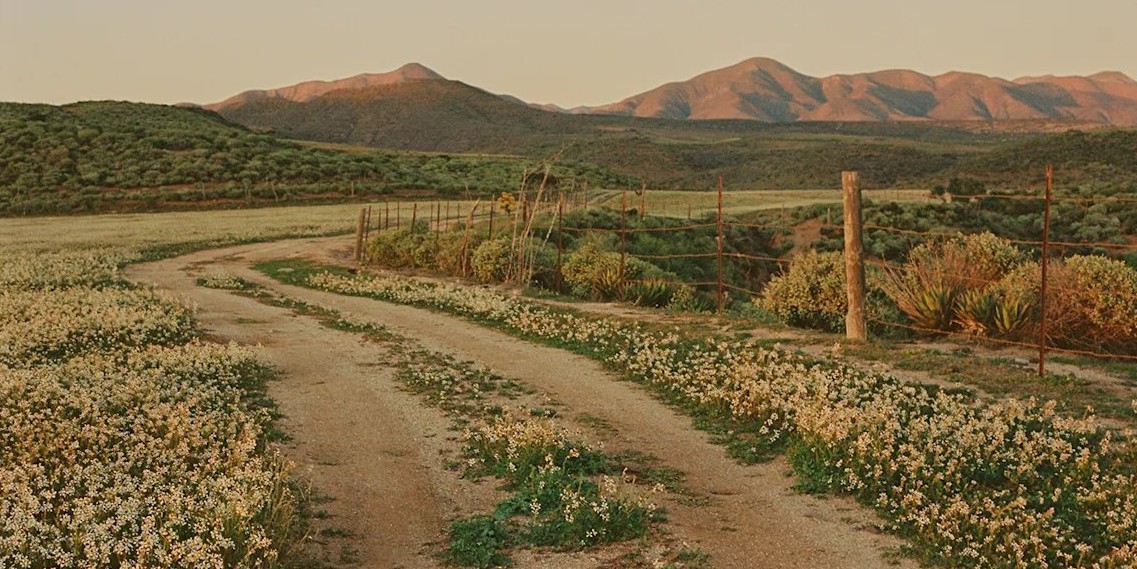
…the road all down through Baja was still not fully paved.
***Every year or two or three, when we saw each other, inevitably at some point we would recount episodes from our great adventure over the summer of 1973. These tellings would arise spontaneously, set off by a resonant detail that had ricocheted into the present by some unfathomable train of connections. We never lived in the same town yet became close friends since that voyage long ago, when I was seventeen and he was eighteen. For me, it was the discovery of a new old world, while for Y, mostly all he knew of his native land was DF, the capital, where his cousins and aunt and uncle lived, and TJ, where we started the trip. In his Chevy van; really, the trip started in Chula Vista, in the days before departure, staying at his parents’ house while we fixed up the van for sleeping on our travels, though he grew up more in TJ and his father’s business was there across the border.
Back then, the road all down through Baja was still not fully paved, barely a dirt road for hundreds of miles; Cabo San Lucas was just a sleepy fishing village; and across the country, Yucatán was not yet a destination for spring break. In those years, though we had no idea, a high school teacher from La Jolla was busy documenting the extensive, mind-blowing, prehistoric cave paintings in the mountains above Mulegé, where we camped overnight, halfway down the Baja peninsula near the gulf side; fifty years later, Y would make a documentary film about that fellow and what he found. In a sense, the entire trip was like a casting of threads forward and back, that we might pick up when least expected; or at least when we might know a little more about where we had been. For two months, we drove all over the country in that van, and from Mexico City onward his cousin N joined us, to the coast and around the Yucatán peninsula, down through Chiapas and into Guatemala, then back up through Oaxaca to the capital. So, countless moments were stored like silver dollars in the memory bank. Which, of course, were likely to be remembered a little differently by each of us.
The epic journey was thus prolonged each time we met, anecdotes and encounters revived, reflected upon, brought into the advancing present, like sources of illumination, flashlights into the unknown reaches still ahead of us. All the same, nostalgia was never an animating force in our irregular efforts to cross paths. To see and hear what each other was up to now was always the welcome news. Once we managed that much, it couldn’t be helped, some spark from the initial odyssey carried through, leaping over the years as if the whole experience might still be recomposing itself to the end of our days. As it has been doing for the past half century.
I cannot say I remember a huge store of details from that early road trip, but I know they remain deep in the internal sediment. Recent years, at the food coop, I often buy a few cactus leaves, prickly pear, nopales, just like those we used to break off by the side of the road: dice and sauté and cook up with eggs. That’s where I first tasted nopales, and tamarindo as well, tastes that have stayed with me ever since. Other strains of what I know—in architecture, history, geography, culture, language—trace back to that same distant summer. Surely Y would have his own list of first encounters, though we have never sought an accounting nor compared such trajectories of learning. In any case, travel entails a series of small awakenings which may well be forgotten in the long run except for what they let through, a glimmer or something greater that is built upon in turn, perhaps without our noticing. That slow subterranean ferment renders us receptive to any number of inadvertent stimuli. Whenever I get together with Y, the field is primed therefore, something will spring forth to remind us: was it in this life? All that, and more; and more still.