Annette Martínez Iñesta
Opening Remarks for The Art & Science of Translation
Tinta regada
10 – mayo de 2026
…it’s profoundly artistic, demanding creativity, intuition, and judgment calls that no AI, algorithm or dictionary can resolve.
***To me, language is simply fascinating, and
the more you know, the better it gets.
***When Esmeralda Santiago begins her memoir When I Was Puerto Rican, she writes: “The jíbaro can never wash away the stain of the plantain.” Now, as an English-speaking reader encountering this for the first time, you might think, “Wait—what did I just read? That doesn’t make sense.” But, of course, it does! You just need to understand our culture to know what a jíbaro is (which, by the way, I recently learned is a Taino word) and how to even pronounce it in English. And yes—la mancha ‘e plátano! If you know, you know.
This brings me to translation. On one hand, it’s deeply scientific—requiring rigorous linguistic analysis and meticulous precision in understanding source texts. On the other, it’s profoundly artistic, demanding creativity, intuition, and judgment calls about tone, rhythm, and cultural resonance that no AI, algorithm or dictionary can resolve.
To me, language is simply fascinating, and the more you know, the better it gets. Something very similar happens in my brain every time I code-switch between Spanish—my mother tongue—and Italian, which I teach to students every day as my profession, and English, which I don’t practice as often anymore. Every language has its je ne sais quoi, and I always tell my students that each one is a new key to a fascinating world, because each language has its essence, its character, its words that can delightfully express a feeling that maybe another language simply can’t. This leaves me with that tip-of-the-tongue phenomenon, telling my students, “Ay, se me fue la palabra—la tengo en la punta de la lengua.”
For example, how can I translate dolce far niente or la dolce vita to my students? I must introduce them to Italian culture and lifestyle, recommend movies and series, show them the essence of Italy so they can understand and reach their own conclusions. Or take something as simple as boh!—which for an Italian means “I don’t know.” I find it very practical, and I love that my students are curious about these expressions too, and that now they use it in the exam when they don’t know the correct answer to a question.
I also love when we rediscover our Puerto Rican Spanish together and consider the complexities of our language when they can’t find exact translations for words like guagua, guineo, or china—words mostly used by us in Puerto Rico or Las Canarias.
I dream in Spanish, I think in Spanish, I communicate with my loved ones in Spanish. But Italian has given me the opportunity to fall in love with a different culture, to live in Italy, to admire beautiful things, and to appreciate the dolce far niente. Speaking English gave me the opportunity to become a flight attendant right after graduating from the University of Puerto Rico—it literally gave me wings and opened doors to new countries and cultures, allowing me to communicate in places where neither Spanish nor Italian were spoken. Each language has allowed me to grow and know myself better. I can feel not only my voice change but also my mood and my thinking shift when I code-switch from one language to another.
These tensions—between art and science, faithfulness and freedom, visibility and invisibility—are what make translation not just a practice but a site of ongoing inquiry. And who better to explore these questions than translators themselves, who navigate these paradoxes daily?
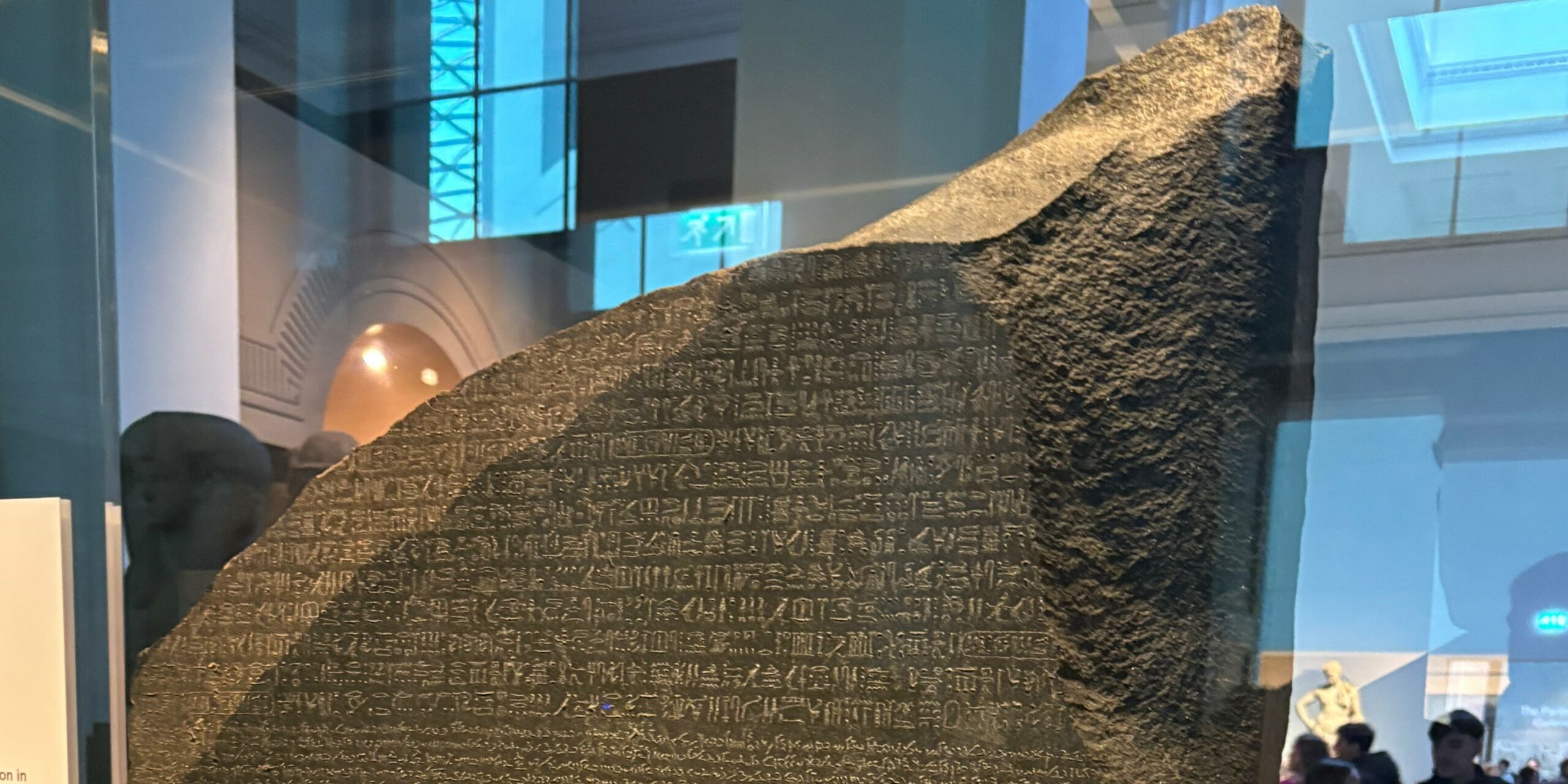
*Cover Photo: The Rosetta Stone, Jennifer Rakeman.