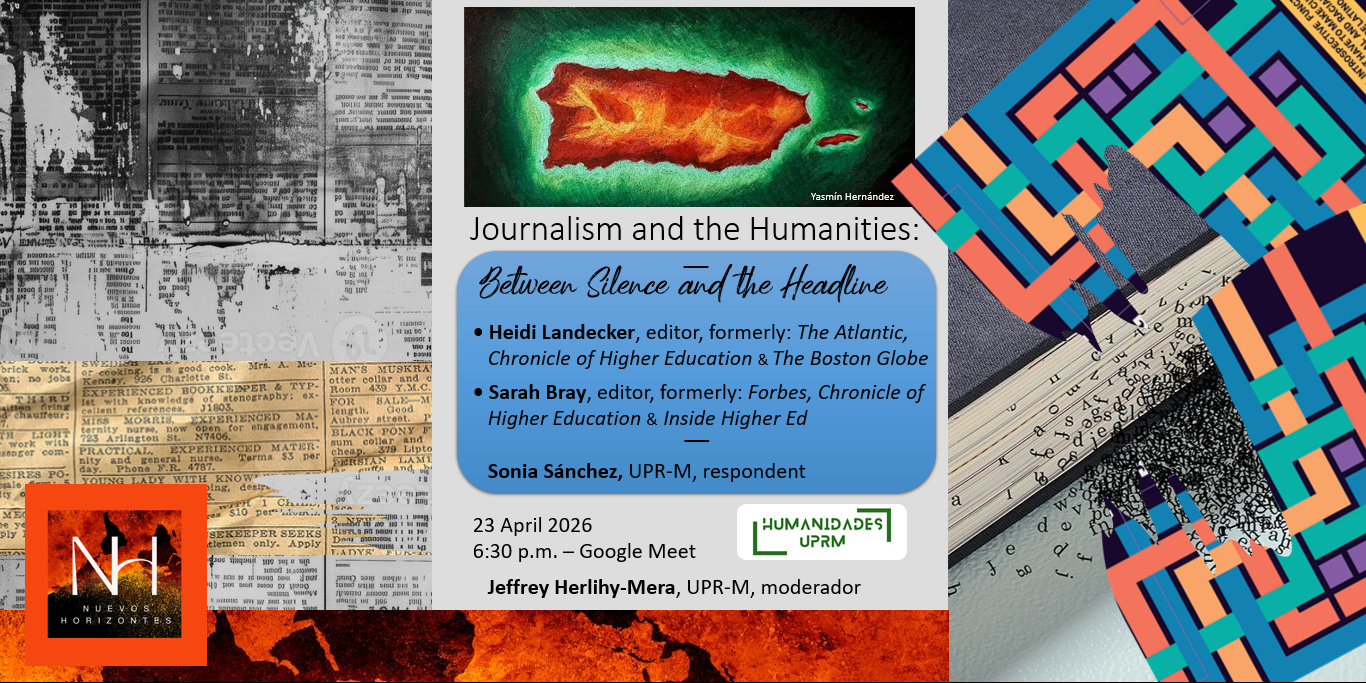

Round table:
—
Journalism and the Humanities:
Between Silence and the Headline
- Heidi Landecker, formerlyThe Atlantic &The Chronicle of Higher Education;
- Sarah Hardesty Bray, formerly Forbes, The Chronicle of Higher Education & Inside Higher Ed.
Respondent: Sonia Sánchez, UPR-M.
Moderador: Jeffrey Herlihy-Mera
23 de abril de 2026
6:30 p.m. – Google Meet.
Enlace para conectar: Journalism and the Humanities.
—
Grupo focal: Lenguaje

—

La discusión sobre Journalism and the Humanities: Between Silence and the Headline me hizo reflexionar sobre la gran responsabilidad que tiene el periodismo en la sociedad actual. Muchas veces las personas leen únicamente los titulares y forman opiniones rápidas sin conocer el contexto completo de la noticia. Esto demuestra la importancia de desarrollar pensamiento crítico y analizar la información antes de aceptarla como verdadera. El periodismo no solo consiste en informar sobre lo que ocurre, sino también en investigar, verificar datos y presentar los hechos con precisión y mucha ética. El proceso de fact-checking es esencial porque un error puede afectar la credibilidad tanto del periodista como del medio de comunicación. Además, el rol del editor es fundamental, ya que ayuda a revisar la claridad, exactitud y calidad de la información antes de que sea publicada. Por otro lado, las humanidades aportan una mirada más profunda y de reflexión sobre la realidad. No se enfocan únicamente en lo inmediato o en lo que puede convertirse en un titular interesante, sino en comprender las causas, consecuencias y el impacto humano de los eventos. El concepto de “silencio” me pareció muy importante porque representa todas aquellas voces, historias y experiencias que muchas veces no reciben atención en los medios. En ocasiones, las noticias priorizan lo sensacional o lo más popular, dejando fuera perspectivas importantes de la comunidad. Por eso, escuchar la voz del pueblo y tomar en cuenta diferentes experiencias ayuda a construir una visión más completa de la realidad. Una excelente conferencia y un tema del cual se habla muy poco.
En la charla, “Journalism and the Humanities: Between Silence and the Headline” Una de las cosas que más me impactó fue cómo se presentó el periodismo y las humanidades como disciplinas que se complementan entre sí. Me pareció muy interesante la idea de que el periodismo trabaja con la inmediatez y la urgencia, mientras que las humanidades aportan la profundidad, el análisis crítico y la reflexión necesaria para comprender mejor las historias y los problemas sociales. También me llamó mucho la atención la discusión sobre el silencio y las voces marginadas, porque demuestra que el periodismo no solo consiste en informar hechos, sino también en decidir qué historias reciben atención y cuáles permanecen invisibles. Además, me gustó mucho el énfasis que se dio a la importancia de los editores y verificadores de datos. Ciertamente este es un factor determinante en la credibilidad de una publicación y en la manera en que el público interpreta la información. En general, esta charla me ayudó a entender el periodismo como una práctica ligada tanto a la comunicación como a la responsabilidad social y ética. ¡Excelentes recursos!
The online round table “Journalism and the Humanities: Between Silence and the Headline” featured fascinating conversations from Heidi Landecker and Sarah Hardesty Bray about their personal and professional journeys in journalism. Both speakers shared how they navigated the world of media and writing while maintaining a strong connection to the humanities. Their experiences were inspiring because they demonstrated that journalism is not only about reporting facts, but also about understanding people, culture, and society through critical thinking and storytelling.
Heidi Landecker spoke about her work with publications such as The Atlantic and The Chronicle of Higher Education, emphasizing the importance of thoughtful and meaningful reporting. Sarah Hardesty Bray also shared valuable insights from her experiences at Forbes, Inside Higher Ed, and The Chronicle of Higher Education.
One of the most interesting ideas presented during the discussion was that journalism is much more than simply informing the public. Journalism also requires understanding why and how events are happening, while being aware of the importance and weight that news can have on society and the world. Journalists have the responsibility of communicating information carefully because the way stories are presented can shape public opinion, influence decisions, and impact communities. This connection between journalism and the humanities highlights the importance of empathy, ethics, and critical analysis in reporting.
The discussion became even more engaging with comments from respondent Sonia Sánchez and moderator Jeffrey Herlihy-Mera, who guided the conversation and connected journalism with the role of the humanities in modern society. Overall, the round table was both informative and motivating, showing how journalism can amplify voices, encourage critical thought, and create meaningful dialogue in today’s world.
El tema Journalism and the Humanities: Between Silence and the Headline me hizo reflexionar sobre la diferencia entre informar y realmente entender lo que ocurre en la sociedad. El periodismo muchas veces se enfoca en lo inmediato, en lo que llama la atención y se puede convertir en un titular atractivo. Sin embargo, esto puede dejar fuera detalles importantes o experiencias que no son visibles a simple vista. Por eso, el concepto de “silencio” me parece clave, porque representa todas esas historias, perspectivas o contextos que no siempre llegan a ser contados. Por otro lado, las humanidades aportan una mirada más profunda, ya que buscan interpretar, analizar y dar significado a los eventos. No solo se trata de qué pasó, sino de por qué pasó y cómo afecta a las personas. En mi opinión, la combinación de ambos campos es necesaria. Un periodismo sin análisis puede ser superficial, mientras que las humanidades sin difusión pueden quedarse limitadas. Este tema me hace pensar que es importante desarrollar pensamiento crítico para no quedarnos solo con lo que vemos en los titulares, sino también cuestionar, investigar y tratar de comprender mejor la realidad que nos rodea.
La mesa redonda sobre Journalism and the Humanities me pareció muy interesante porque mostró que el periodismo va mucho más allá de simplemente informar. Me llamó la atención la importancia del fact-checking, ya que un error puede afectar la credibilidad de todo el trabajo. También me pareció importante cómo Sarah Bray explicó el rol del editor, no solo escribiendo, sino también revisando y asegurando que la información sea correcta y clara. Por otro lado, la experiencia de Heidi Landecker me impactó porque demuestra que no hay un solo camino para llegar al periodismo. Su énfasis en construir comunidad, usar multimedia y evitar lenguaje complicado resalta cómo el periodismo debe adaptarse a la audiencia actual. Además, me pareció interesante cómo ambas mencionaron los retos de la profesión, como la falta de estabilidad. En general, la charla me hizo reflexionar sobre la responsabilidad ética del periodista y la importancia de comunicar con precisión y propósito
En el día de ayer durante el taller Journalism and the Humanities: Between Silence and the Headline nos explicaron la importancia y lo difícil que aveces suele ser el periodismo. Fue una experiencia nueva para mi ya que es la primera vez que tomo un taller que los recursos sean de Estados Unidos y fue muy buena experiencia. Al escuchar a Sarah y a Heidi Landecker se puede reflexionar sobre lo que verdaderamente da impacto en una noticia. Los temas de ética y moral influyen mucho en las noticias ya que no todo lo que un periodista sabe o conoce se puede publicar. Cada persona tiene creencias y opiniones distintas así que cada persona toma la noticia de manera distinta. Nosotros las personas cuando vemos las noticias leemos solo el titular y una breve descripción para ya sacar opiniones que muchas veces no son todas ciertas. Este tipo de casos suele ocurrir mucho en Puerto Rico y más en las redes sociales cuando sale una noticia muchas personas hacen sus comentarios como si hubiesen vivido la situación. Entiendo que como periodista este tipo de casos puede ser fuerte pero si realmente es lo que te apasiona y te gusta se puede llegar muy lejos.
Luego de escuchar la conferencia Journalism and the Humanities, considero que el periodismo requiere una gran responsabilidad, ya que no se trata solo de informar, sino de hacerlo con precisión y ética. Muchas veces como audiencia aceptamos lo primero que vemos sin cuestionarlo, pero detrás de cada noticia hay un proceso riguroso de edición y verificación que busca garantizar que la información sea correcta. Aun así, entiendo que no todo lo que se escucha puede publicarse, aunque sí es importante reconocer y tomar en cuenta la voz del pueblo. Esto demuestra que ser periodista no es sencillo y que mantenerse en ese campo requiere esfuerzo, práctica y especialización. También me resultó significativo conocer las experiencias de profesionales que, a pesar de enfrentar dificultades como la inestabilidad laboral o comienzos complicados, lograron abrirse camino. Esa idea de adaptarse a nuevas formas de comunicación y aprovechar oportunidades me parece esencial, especialmente en un mundo donde la tecnología cambia constantemente. Finalmente, pienso que el periodismo muchas veces se enfoca en lo inmediato y deja de lado la profundidad. Por eso, integrar las humanidades permitiría analizar mejor la realidad, dándole espacio a la reflexión y no solo a la rapidez.
Este evento consistió en muchos de los aspectos que se deben tomar en consideración en el periodismo. Muchas veces internalizamos lo primero que vemos y nos dejamos consumir por el mismo sin buscar otros recursos. Antes de que una noticia pueda ser publicada debe ser editada ya que todos los datos deben ser lo más correcto posible porque información falsa no debería ser publicada aun si uno esta en contra. Al buscar recursos para formar la notica es difícil tener que rechazar los argumentos del pueblo. Es decir, no se puede escribir de todo lo que se escucha, pero sí se puede tomar en consideración la voz del pueblo. Ser periodista no es trabajo simple y es difícil mantenerse en el mismo puesto. Aun así, si el periodismo es algo que apasiona, es importante enfocarse en el área de especialidad para crecer y obtener experiencia. Mientras practiques una tarea, más fácil es completarla.
This was a very nice activity. While I myself can’t really speak about the impact it had on me, as I have never been involved in the world of journalism, I did find the experiences of both Dr. Sarah and Dr. Heide to be extremely resonant and also hopeful. As an aspiring researcher, I have always been keenly aware of the many uphill battles one must go through to succeed in this field. Although their work is in a completely different area, hearing how both professionals started and how difficult it was for them to reach where they are today was very impactful. From networking at conferences to secure their first jobs to moving between editorial positions to continue growing and maintain financial stability, their experiences made me more confident about my own goals. While I cannot fully speak to how their advice could translate into my own profession, I can say that Heide’s advice about adapting to new forms of media and opening yourself to new opportunities is something I strongly agree with. As technology advances each day, our perspective as a human collective evolves, and facilitating new ways of understanding is key to ensuring that what you are reporting not only resonates with the audience but, more importantly, keeps their attention. This is also crucial in science communication, and I can clearly see its significance for up and coming journalists.
The meeting was about Journalism. Sarah talks mostly of all the important things about journalism, publishment companies and controversies. Heidi talks about how she had to adapt to the new system put at that time. She talks about how the editor is better than using AI. Do not expect to stay at one job as a Journalist. Fact checking is one of the most important things to take into consideration as a Journalist. The illustrations are one of the most defining parts on a newspaper. It’s important to understand culture and language when writing about a story foreign to your own culture. Although you can see a lot of the news on social media or the internet web, learning about the news via newspaper and television is good because we get to see the effort that a whole group of people put together so everyone can be informed of the truth and current events.
The discussion between Sarah Hardesty Bray and Heidi Landecker, focusing on journaling and writing, was very insightful and enlightening on how the role of editors impact storytelling overall. Sarah Bray, an opinion editor in Higher Ed, highlighted the importance of visibilizing invisible realities to the public, fact checking, active vs. passive work and the overall art work made in order to make a published column. Bray, also focused on the controversies and challenges within journaling, mentioning examples such as an op- ed made by Senator Tom Cotton and his stance on the military being involved in stopping the protesting of George Floyd’s death. Particulary, I enjoyed how Bray integrated the importance of understanding cultures and how, as a collective of students from the University of Puerto Rico, we further grasp the concept of culture and language. This is notably important, because it inspires and validates the particular skills, we as students, bring to the world of journaling. In regards to Heidi Landecker, writer and editor, I admired her story from having a background in science education and shifting to the fact checking department and writing world. Her story impacted me in how her unconventional path and short story led to her interest in journaling and how that reflects on how we possess skills that sometimes take time to discover. Additionally, I appreciated her visibilization on the reality of journaling and how a layoff can occur and a lack of stability can be felt. Finally, I valued her advice on reading and writing, since these are skills that are always needed in any STEM or humanities professions. Overall, it was an enriching discussion in the world of journaling and how this can become a reality for aspiring writers in Puerto Rico.
Siento que este tema habla de algo que pasa todo el tiempo y que casi nadie cuestiona de verdad. El periodismo vive de lo inmediato, del titular que impacta y se consume rápido, pero muchas veces deja fuera lo más importante: la profundidad. A mí me parece que ahí es donde entran las humanidades, porque no todo se puede explicar en una noticia corta. Hay cosas que necesitan silencio, análisis y hasta incomodidad para entenderse. Como estudiante de literatura comparada, pienso que lo que no se dice también comunica, y a veces dice más que el propio titular. Vivimos en una sociedad que quiere respuestas rápidas, pero no siempre quiere pensar. Por eso creo que es necesario ese balance entre informar y reflexionar. No se trata de escoger uno u otro, sino de unirlos para entender mejor la realidad sin quedarnos solo con lo superficial. Para mí, si el periodismo y las humanidades se complementaran, nos darían el resultado de una idea o una visión mejorada de lo que vivimos o la realidad que nos rodea.