Puerto Rico Hosts CCSDS Spring 2026 Technical Plenary for the First Time, with UPRM as Host
By Mariam Ludim Rosa Vélez
Prensa RUM
Friday, May 29, 2026
For the first time in its history, the Consultative Committee for Space Data Systems (CCSDS) is holding its Spring 2026 Technical Plenary in Puerto Rico, bringing together leading space agencies, research centers, universities, and representatives from the aerospace industry.
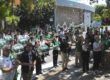
The University of Puerto Rico at Mayagüez (UPRM) is hosting the international forum, which opened on Monday, May 25, at the Mayagüez Educational Opportunities Residential Center (CROEM).
CCSDS is a multinational forum focused on the development of standards for space communications and data systems. Through this collaborative effort, experts from multiple countries work together to define protocols that enable interoperability among government and commercial agencies, reduce technical risk, and support joint operations for missions to the Moon, Mars, and deep space.
During the opening session, Miguel A. Muñoz Muñoz, interim chancellor of UPRM, spoke about the significance of the campus serving as a meeting point for the international scientific community.
“We are honored to welcome to the University of Puerto Rico at Mayagüez some of the most distinguished minds in aerospace science and in the development of communication systems that make effective collaboration among agencies, universities, and industry possible,” Muñoz Muñoz said. “Scientists, industry representatives, researchers, and technical experts are coming together here to address one of the central challenges of space exploration, enabling missions to communicate and operate in a coordinated way in environments that are entirely different from those on Earth.”
He added that hosting the event positions Puerto Rico and UPRM within the global arena where international standards for space communications, navigation, and data handling are defined.
Sami W. Asmar, president of CCSDS and manager of strategic partnerships and customer formulation in the Interplanetary Network Directorate at NASA’s Jet Propulsion Laboratory, explained the importance of the meeting for the global space community.
“This is CCSDS’s annual technical plenary,” Asmar said. “This is where we discuss and develop the standards that serve as common protocols for space communications and navigation. Without them, different missions and agencies would face serious challenges working together. This work is essential.”
Asmar also welcomed the opportunity to hold the meeting in Puerto Rico. “We are very happy to be here,” he said. “Puerto Rico is a beautiful place, and we truly appreciate the invitation.”
Beyond the technical discussions, Asmar noted that CCSDS places strong emphasis on engaging with the academic community. “We want to connect with students, listen to their ideas, and learn from their perspectives,” he said. “Some students have already reached out to us, and that exchange is an important part of why we are here.”
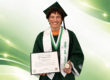
That focus on developing emerging talent was echoed by Shannon Rodríguez‑Sanabria, branch head for the Microwave and Telecommunications Systems Branch at NASA’s Goddard Space Flight Center and a UPRM alumna, who originally proposed holding the forum in Puerto Rico.
“Bringing this event to UPRM is a tremendous source of pride for me,” Rodríguez‑Sanabria said.
“UPRM is expanding its presence in the aerospace field, and this forum allows participants to see firsthand a global community working together on interoperability across space agencies.”
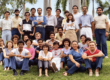
A graduate of UPRM’s Department of Electrical and Computer Engineering, Class of 2004, Rodríguez‑Sanabria noted that the event includes approximately 80 in‑person participants and more than 110 virtual attendees from space agencies and technical organizations worldwide.
“These are experts in their respective fields,” she said. “There are more than a dozen technical working groups meeting at the same time, all engaged in intensive work throughout the week.”
Kevin Coggins, deputy associate administrator for NASA’s Space Communications and Navigation Program, also participated in the opening session, making him the highest‑ranking NASA official to attend the event.
Coggins spoke about the relevance of CCSDS standards as NASA prepares for the Artemis missions and the development of long‑term lunar infrastructure.
“We are entering a new era of space exploration,” Coggins said during an interview with Prensa RUM. “This is no longer about isolated missions. Multiple missions will be operating simultaneously on the Moon, and for that to work, they must communicate reliably and seamlessly. CCSDS is the group that defines the standards that make that interoperability possible.”
He added that future exploration efforts will depend on close collaboration among space agencies, industry partners, and international stakeholders. “This is truly a global effort,” Coggins said. “Organizations from around the world are working together here to determine how we will operate in extremely complex environments, first on the Moon and eventually on Mars.”
From the aerospace industry perspective, Jorge Amodio, a senior engineer at Intuitive Machines, emphasized the importance of cooperation across sectors.
“Space exploration is extraordinarily complex and requires constant collaboration,” Amodio said. “It cannot be driven by a single agency. Forums like this allow us to define shared protocols so systems developed in different countries can work together.”
He also highlighted the role of universities in advancing these technologies and preparing the future workforce for the aerospace sector.
In addition, Ingrid Y. Padilla Cestero, special assistant to the chancellor for research, innovation, and creative endeavors, pointed to the broader institutional and economic impact of hosting the event in Puerto Rico.
“This is the first event of this scale to be held on the Island,” Padilla Cestero said. “It allows us to showcase the quality of research, innovation, and talent being developed at UPRM, while opening new opportunities for our students, faculty, and the growth of Puerto Rico’s aerospace ecosystem.”
As part of the official program, the delegation visited the chancellor’s official residence on Tuesday, May 26, where they attended a dinner and cultural presentation featuring the bomba ensemble Bámbula Litoral. In the coming days, CCSDS participants will also take part in an academic exchange session with UPRM students and faculty.
The CCSDS Spring 2026 Technical Plenary runs through June 4 and includes participation from space agencies, NASA centers, universities, laboratories, and leading aerospace and telecommunications companies from the United States, Europe, Asia, Canada, Africa, and Latin America.